Metric Drift and Its Compounding Cost Over Time
Unrecorded changes in metrics create compounding costs that hide until decisions go wrong.
Metric drift is the accumulating gap between what a number is supposed to mean and what it actually measures. In a Postgres-backed stack, that gap grows as definitions, exports, and application changes diverge. Assumptions built on one wrong report create the central risk. Preventing that compounding cost requires continuous checks on metric definitions and a governed data layer shared by people and AI agents.
What metric drift actually is and why it behaves like compound interest
Consider a load balancer with an undocumented configuration change. That change may cause no incident at first. But if later services are built against assumptions that no longer match the running configuration, correcting the original change is no longer an isolated task. The services now depend on the divergence. What began as a small difference between declared and actual state has become part of the environment’s working structure.
The general law is that unrecorded changes alter the baseline for everything that follows. Each change makes the environment a little harder to predict, while later work treats it as normal. Over months or years, troubleshooting becomes harder because the declared standard no longer provides a reliable starting point. The uncertainty compounds over time through dependence. Restoring the original state may require correcting work that was reasonable against the wrong baseline.
Metric drift works the same way in data. It is not a mistake that happens once, but a process in which each unrecorded inconsistency builds on an already-degraded definition. A number can remain available and plausible throughout that process. Its continued use then embeds the inconsistency in reports, goals, and downstream decisions, making the next divergence harder to recognize.
The term “drift tax” names the operational and financial cost of this widening gap. In configuration management, the gap lies between the declared standard and what is running. For metrics, it lies between what teams think a number means and how each system calculates it. The burden grows because dependencies accumulate around the divergence, rather than because each discrepancy remains a separate item to repair.
Where metric drift originates in a Postgres-backed stack
In a Postgres-backed product stack, metric drift has three distinct origins, all of which are active simultaneously in most early-stage teams. The first is definitional fragmentation across systems. “Closed” revenue, “recognized” revenue, and “collected” revenue can each be correct in context yet contradict one another in a shared report. The conflict begins at the boundary between meanings. Putting the values together does not establish which meaning the report is supposed to use.
That boundary appears early in a Supabase-backed product. A question about revenue by signup cohort, CAC against usage, or which flagged accounts churned already crosses Supabase, Stripe, ad platforms, and a CRM. It sounds like one question. But to answer it, teams need to agree across sources that cover different parts of the business. Metric drift is therefore a multi-source concern from the first substantive analytics question.
The second origin is the manual export that quietly falls behind its source. A spreadsheet copied from Postgres at month-end has a timestamp, but the timestamp does not guarantee that the data remains suitable when a decision is made. The source may already have changed. Where nobody owns the export cadence, updates can slip without anyone declaring the process broken. The spreadsheet remains usable even as its relationship to current conditions weakens.
The third origin is an unmaintained definition that survives a change in the business. A calculation written for one product phase can persist into the next while measuring something subtly different from what the team now intends. The code still runs with no clear sign of failure. JSONB adds a layer of schema drift beneath all three origins because application code can change the shape of stored data without a migration. An undocumented application change can therefore leave a metric reading a field whose meaning has shifted.
These seams are structural features of fast-moving teams. Teams use different systems for different jobs and exports for what they need now, while changes to the product change what the business needs to measure. None requires negligence to produce divergence.
How the compounding cost appears in practice — and why it stays hidden so long
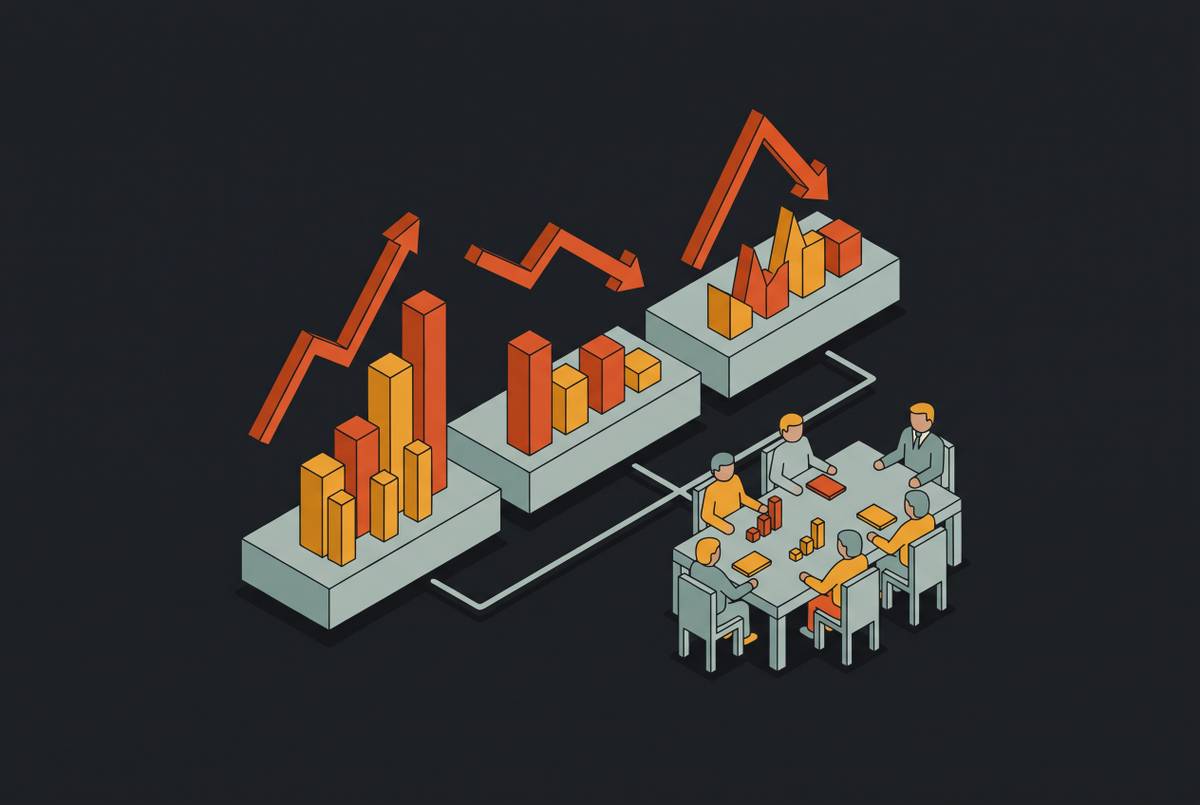
The way a single source of truth, or SSOT, breaks down is familiar. Marketing says MRR grew by one figure, finance gives another, and sales says the real number is somewhere between them. Each team can have worked in good faith. They pulled from different tools, used different definitions, and selected slightly different time windows. Once that disagreement becomes routine, KPIs stop settling questions and start triggering debates about which number deserves authority.
Those debates create recurring reconciliation work. Data teams spend a significant share of their time on quality and reconciliation tasks that restore a baseline without producing new insight. Without a dedicated data function, the work falls to founders, operators, or engineers who are not accountable for tracking it. The labor becomes easy to overlook. This distinct cost caused by drift is absorbed into the work of preparing a report or resolving a disagreement.
The cost to strategy starts when teams keep working despite the disagreement. Teams pursuing goals measured by drifted metrics optimize for a signal that no longer reliably represents leadership’s intent. Changes in priorities, unclear communication, and changes in the market can widen that gap without any clear sign that something has gone wrong. Reported progress may coexist with misaligned execution. By the time the difference becomes visible, the organization has already made decisions using incompatible accounts of performance.
Configuration drift’s costs are distributed across downtime, security, labor, performance, and tooling. Metric drift also takes its toll on the work of reconciliation, the quality of decisions, and trust. Each instance can look small in isolation. The gap between what IT believes is deployed and what is actually running can also persist for many months before an incident forces it into view.
Monitoring often leaves this pattern undisturbed because its focus on outputs leaves the definitions beneath them unchecked. A drifted calculation can give a number that looks right when someone checks it by eye. AI model monitoring offers a related example. Mean absolute error on a holdout test set can remain stable while live performance degrades because the test set no longer reflects current conditions. That divergence can persist for weeks or months before it is noticed.
The hidden cost is therefore not a measurement problem alone. If each tool preserves its own meaning and monitoring checks only the resulting output, no shared mechanism identifies the disagreement before another consumer uses it. A dashboard can display the number without exposing that conflict. This makes invisibility a structural problem, particularly when the next consumer is an agent that can act without joining the human debate.
Why AI agents turn latent metric drift into an active, fast-moving risk
Human teams can partially absorb metric ambiguity through context and discussion. Before acting, someone can ask which revenue definition a report uses or whether an export is up to date. An autonomous agent has no equivalent human interruption. Once it treats a drifted number as ground truth, its answer becomes input to the next action. An inconsistency that previously caused a meeting can become a systematic output error.
Staleness makes the consequence concrete. A financial agent working from stale positions may come up with actions that are already invalid before it carries them out. A customer-support agent reading a cached table may contradict current reality when answering a customer. Each downstream agent or automated step that consumes the first output inherits the error. The risk compounds through the chain because later actions build on the initial answer rather than independently resolving its underlying definition.
Volume changes the significance of these defects. When agents make millions of calls in production, unresolved naming gaps and metric-definition conflicts are repeatedly acted upon. Weekly confusion can become continuous automated error. Governed definitions consequently become load-bearing infrastructure that also makes reports consistent. A bigger model cannot repair an ambiguous metric definition or an expired permission because those problems must be resolved before the agent receives the data.
Safe access also requires more than read-only credentials. Session-level access control is insufficient when each action must be evaluated against the request’s content, prior actions in the session, and current business context. Attribute-based access control lets governance go beyond static roles. Row-level security limits which records an agent can see, while column-level masking redacts sensitive fields within permitted queries. A fraud detection agent can therefore get transaction amounts and timestamps without getting payment card numbers.
Direct access to production Postgres does not resolve these concerns. Agents face the same friction from row-level security, pressure on the connection pool, and query patterns that work poorly with JSONB. Analytical work also lands on OLTP compute, degrading the application for users. Yet fresh data alone cannot resolve differences in what metrics mean. An agent can query the production database and still receive a drifted metric because that database was never designed to be the single source of analytical truth.
Why catching drift early matters and what structural early detection requires
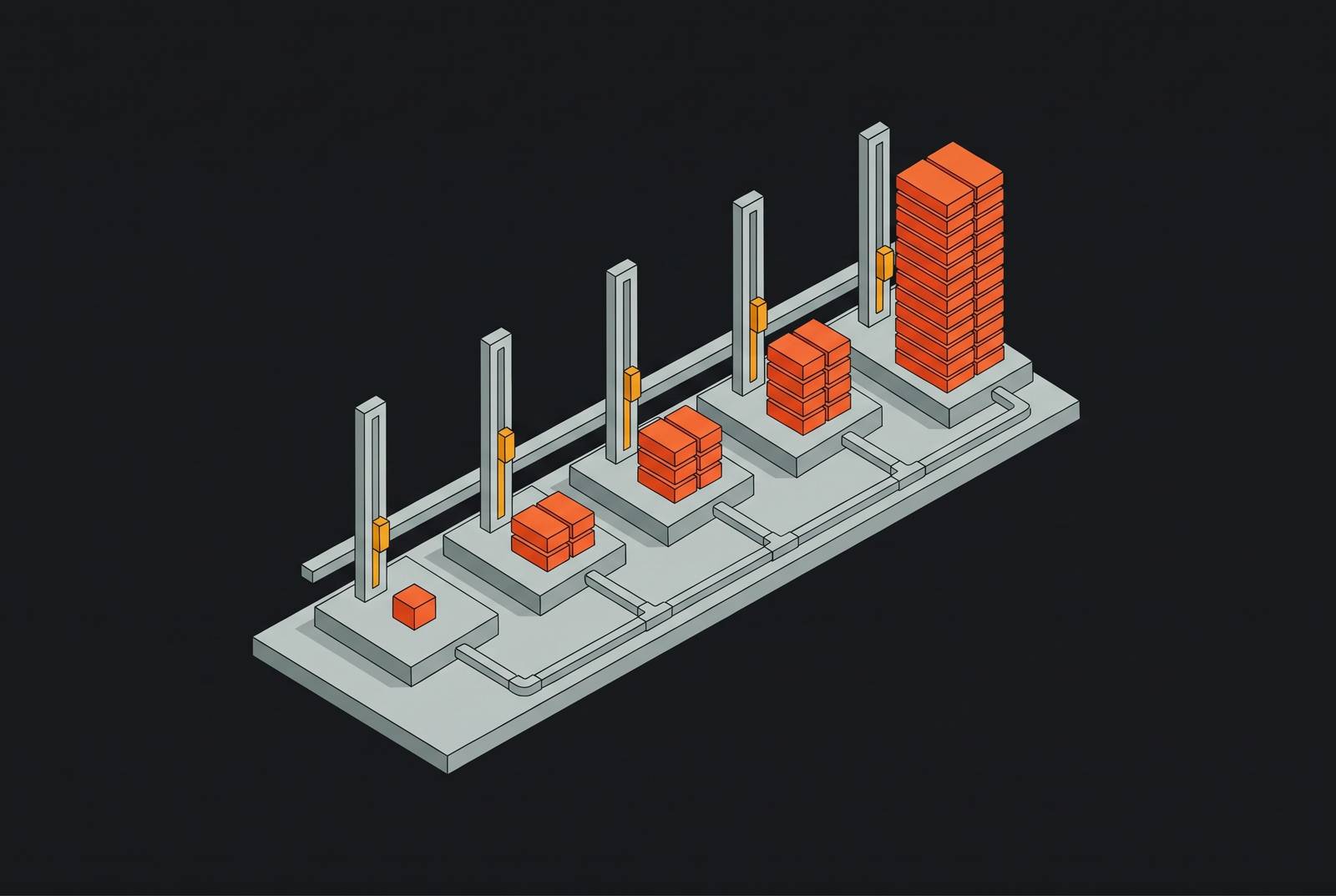
The cost of correction grows non-linearly with drift’s age because more systems and decisions encode the wrong assumption. In the infrastructure case, a single undocumented change required eleven hours of incident response plus days of remediation after three services had been built against that assumption in the intervening months. The original change was only part of the repair. In audited organizations, average drift age before detection was measured in months, with remediation costs accumulating per quarter. These infrastructure examples illustrate why correction becomes harder as dependencies accumulate.
The lesson for metrics is to design detection around that accumulation. Checks that run only before deployments or on manual request leave the intervals between checks unexamined. Continuous comparison of actual state against declared state can catch divergence before downstream systems encode it. That check must include the metric-definition layer. Otherwise, monitoring can establish that the system is healthy while leaving the meaning of its output untested.
Supabase ships a Metrics API compatible with time-series monitoring tools from project creation. It exposes Postgres performance and health series that can be scraped into an observability stack for alerting and long-term retention beyond what Supabase Studio provides natively. That is useful infrastructure visibility. It does not replace checks on business meaning, because query latency and error rates cannot reveal that a revenue calculation has diverged from intent.
Structural early detection therefore requires the definition of “Revenue” itself to be versioned, tested, and compared against its declared form on every change. This extends observability from whether a query works to whether its definition remains the one the business intends to use, including between deployments. It also addresses the weakness that allowed plausible outputs to conceal drift in the first place.
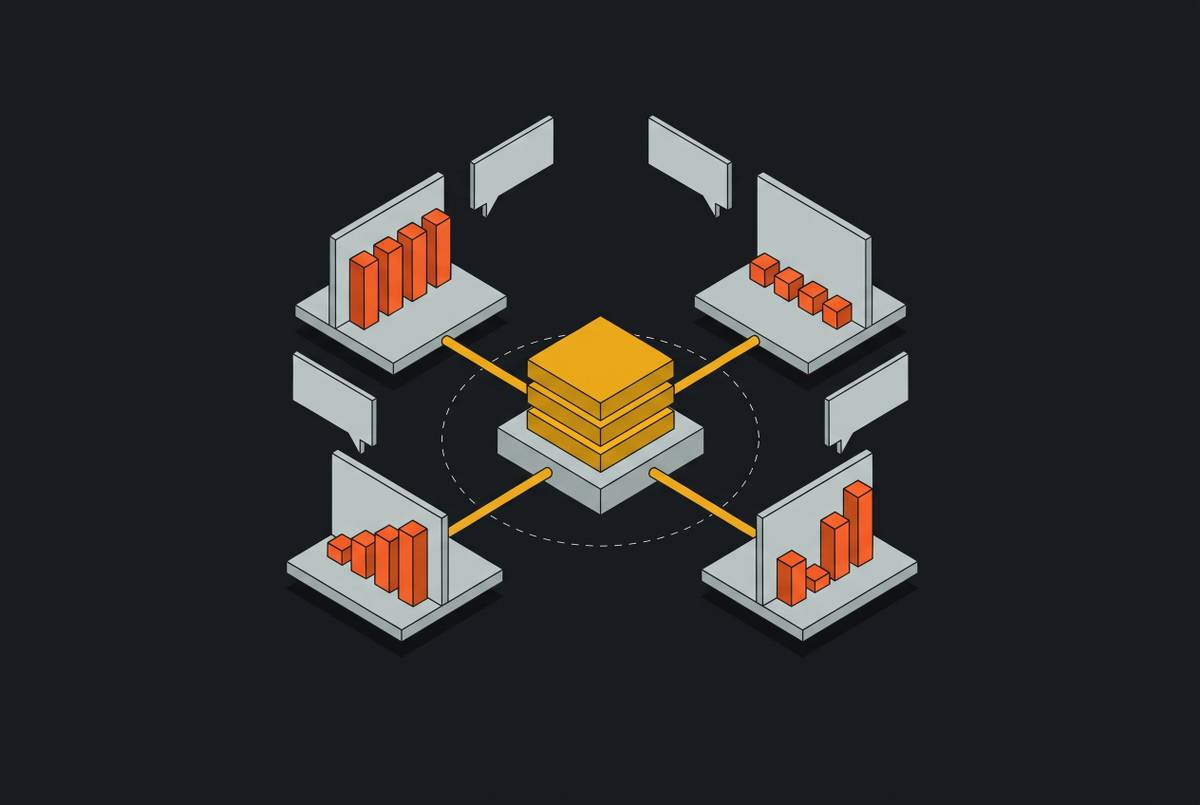
The architectural pattern is to replicate Postgres into a columnar analytical store that also ingests the other sources, then define metrics once on that governed layer. Dashboards, AI, and APIs use the same definitions. Agents can obtain fast, accurate context without touching production databases, while a human and an agent asking about “Revenue” receive the same governed meaning.
MCP-based agentic access depends on that shared layer. A patchwork of point integrations leaves naming and definition conflicts available for agents to expose faster than humans would. Governance must be in place before the agent gets the number. With continuous definition checks at that boundary, divergence can be detected before it becomes the accepted premise of another system or decision.