Schema Drift and the Fragility of Pipeline-Dependent Analytics
Schema drift silently corrupts analytics pipelines faster than teams can fix them.
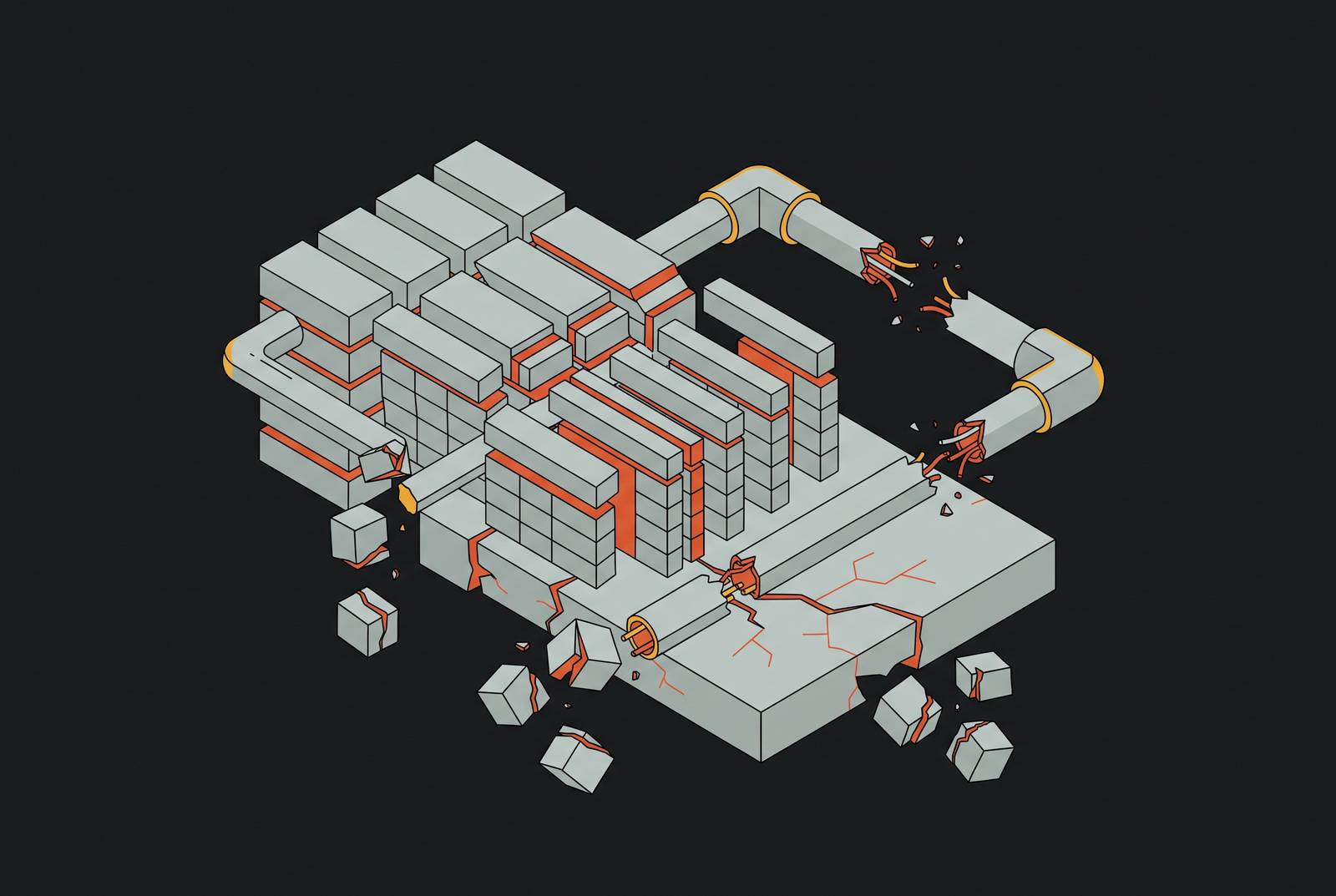
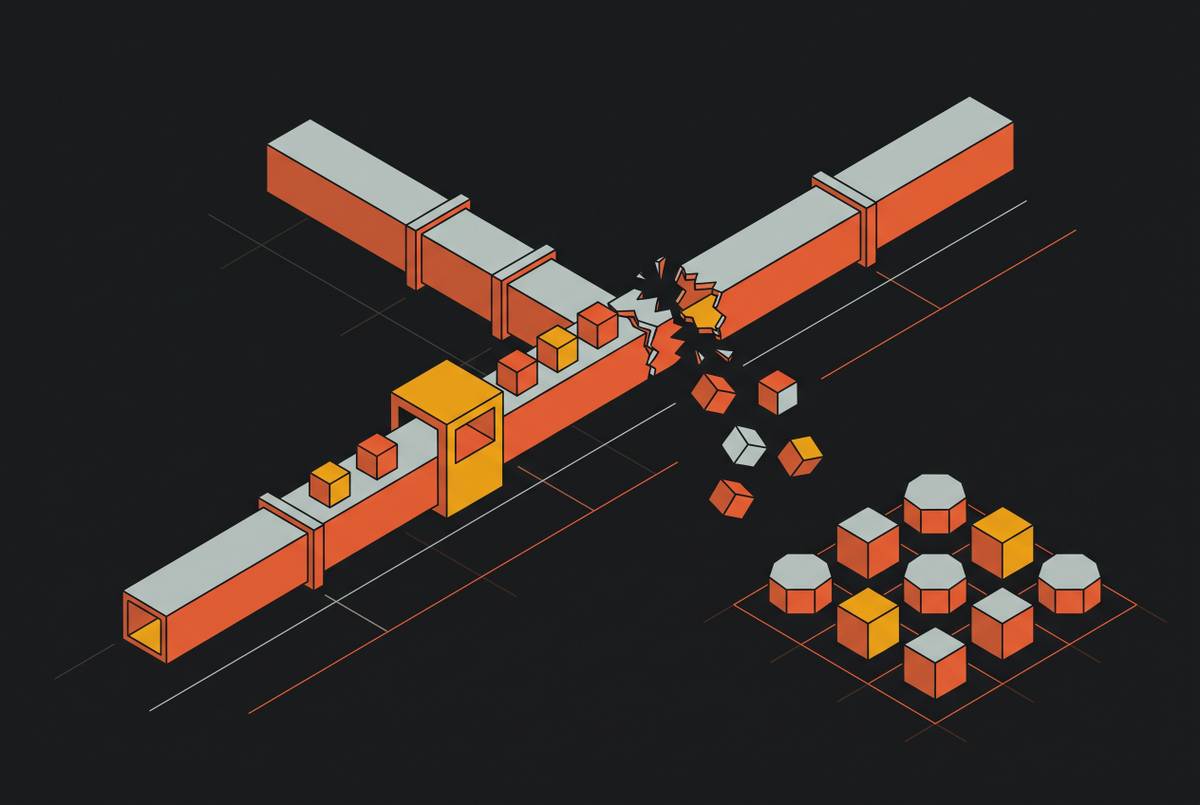
Analytics pipelines fail at a rate that tracks the pace of change in the data they depend on, and that pace has nowhere to go but up. The underlying cause is schema drift: the schemas pipelines rely on are not fixed agreements, they are moving targets that shift every time an upstream system is touched. None of this happens with warning. APIs get new versions on their own release schedule, microservices add fields without telling anyone who consumes them, and third-party data providers change their payload format overnight, and in every one of these cases, the pipeline reading that data finds out only when something downstream stops making sense.
Drift takes a handful of recognizable shapes: fields get added, fields get dropped, field types change, the overall structure gets reorganized, and fields get renamed. Each shape breaks a different kind of downstream logic. In loosely-typed pipelines, or wherever the change goes undetected, that same type shift propagates straight into joins, into aggregates, and into the BI outputs stakeholders are reading, with nothing to mark where it entered.
Some of this drift is at least detectable. Semantic drift is a different problem. When a field gets renamed from customer_id to user_key, or when "revenue" quietly starts meaning net instead of gross, no schema check catches it, because nothing about the structure changed. What changed is the meaning, and meaning is not something a diff tool can see. This is where the most expensive incidents come from: the numbers still look plausible, so nothing fires an alert, while the metric itself is quietly measuring something other than what everyone believes it measures.
How a single schema change travels silently through a layered pipeline into a corrupted metric
The real danger in pipeline-dependent analytics is that a break in one stage travels through every layer after it without announcing itself, so that by the time anyone notices, the damage is already several steps removed from its source. A modern pipeline is rarely a single hop from source to output. A pipeline monitoring guide from DQLabs lays this out directly: one schema change at the source can move silently through that entire chain, corrupting reports, retraining models on bad data, and wearing down stakeholder confidence well before anyone catches it.
What makes the cascade silent is that every intermediate stage keeps passing data forward even after that data has gone wrong. The pipeline finishes its run. No job throws an error. By every operational measure, the system is healthy, and the output it produces is wrong anyway.
Consider a common and entirely realistic version of this: a document set contains an address field with mixed types, some records store it as a string, others as a structured object. The pipeline reports successful completion the entire time.
That's the defining failure pattern of pipeline-dependent analytics: the system looks healthy while it manufactures wrong answers. The more transformation layers sit between the original source and the final metric, the more places a schema change can land without tripping anything. Some SQL models and dbt projects are strict enough to error out cleanly when a type changes or a field vanishes, which is the preferable outcome. Far more often, what happens instead is a silent null, a row quietly dropped, or an aggregation that's just wrong, with no error anywhere in the chain to point back to.
What happens to a team's numbers when pipeline failures accumulate
Pipeline fragility is not something an engineering team pays for once and then moves past. It scales with the number of pipelines in production, so the problem gets measurably worse as the data stack grows. Pipelines break repeatedly, not as rare events, and every one of those breaks costs real engineering time to track down and fix, time spent reconstructing what changed upstream and where exactly it broke something downstream.
That diagnostic burden tends to land on senior engineers, the same people who are also responsible for new integrations, performance work, and whatever AI initiatives the organization is trying to stand up. AI feature stores are still running on refresh schedules that were set months earlier and never revisited, because nobody had the bandwidth to update them.
The cost compounds beyond the hours spent on fixes. When a finance team discovers that a revenue dashboard has been wrong for several days running, the damage isn't just that one number. Trust erosion, more than any single outage, is the cost that tends to define these incidents.
None of this stays contained to engineering overhead either. Decisions get made on data that's stale or already corrupted, and those decisions carry their own cost downstream, separate from whatever it took to fix the pipeline. Machine learning models retrained on bad pipeline output degrade quietly, with nothing flagging the problem until customer-facing metrics drift past whatever threshold someone eventually notices.
Patching Individual Pipeline Breaks Does Not Stop the Fragility
Fixing a broken pipeline the moment it breaks is the rational response to that one incident and the wrong response to the pattern it belongs to. It treats something structural, built into how pipeline architecture works, as a series of one-off defects that each get resolved and closed out.
Every patch adds its own layer of complexity: a new type coercion here, a new null-handling rule there, a version check somewhere else, and every one of those additions is a fresh assumption that the next upstream schema change will eventually invalidate. The pipeline doesn't get sturdier with each fix. It gets more brittle, because the number of places where an unhandled schema change can cause trouble keeps growing right along with the patch count.
Manual fixes don't scale to the actual pace of schema change across environments with dozens of data sources and hundreds of connected datasets. Estuary's guide to schema handling makes a point of noting that detecting and reconciling schema differences across environments takes manual effort, testing, and coordination between teams, a cost that recurs on every change with no project end date.
Monitoring and anomaly detection genuinely help, but they help with visibility, not with the rate of breakage itself. Metric definitions are tightly coupled to source schemas through layer after layer of transformation logic, and that coupling is the underlying cause that catching a problem faster doesn't touch, since it's what makes any single schema change dangerous. Reliable analytics requires continuously watching the pipelines that produce it, but that continuous watching is itself a cost that grows right alongside pipeline count, and it's still a response to symptoms rather than a change to the structure producing them.
Better testing, dbt tests, schema registries, and contract enforcement at the point of ingestion do genuinely cut down on breakage. When patches and better monitoring only address the symptom, the fix that actually holds has to change the structure generating the symptom.
What data contracts establish
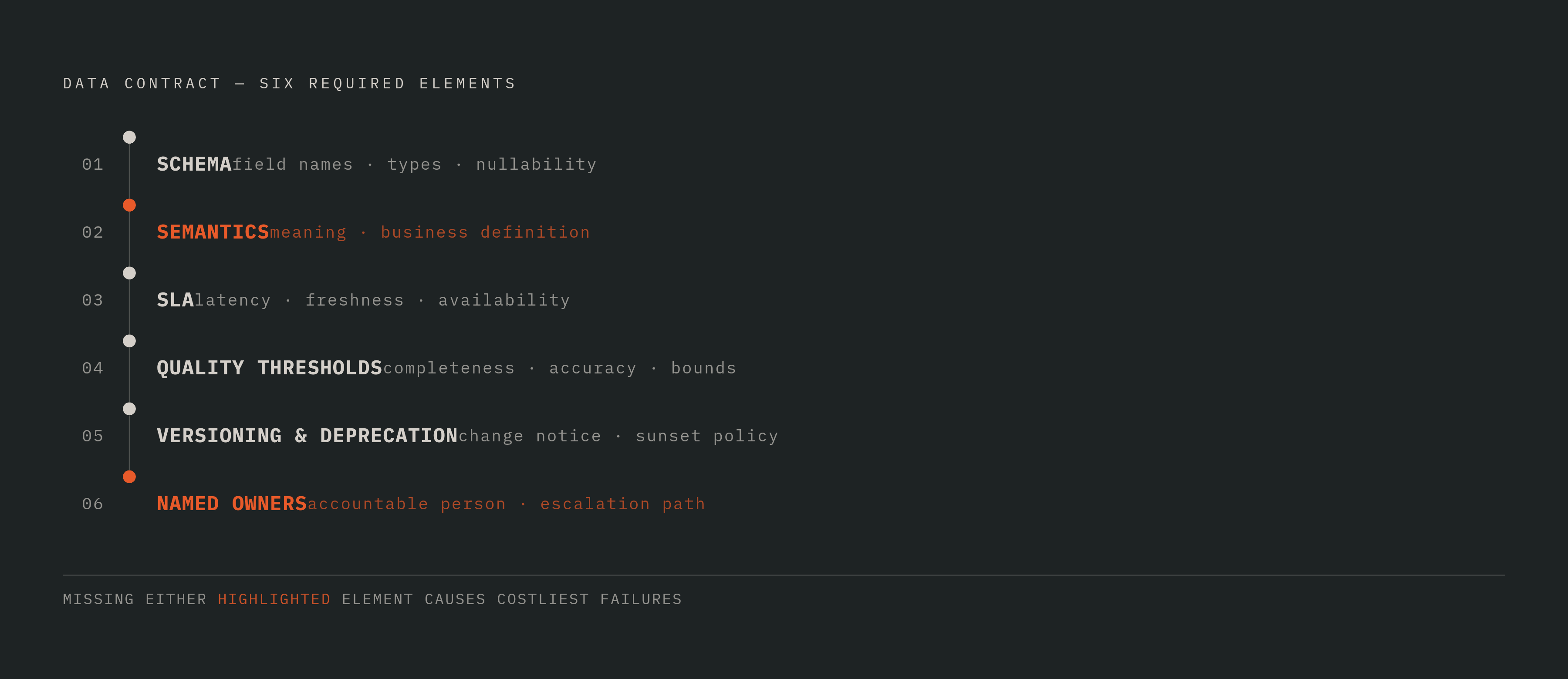
Data contracts make the relationship between a data producer and its consumers explicit and enforceable. A properly specified contract covers far more ground than a schema definition alone. It commits a producer to field names, types, nullability, the actual semantic meaning of each field, how often the data updates, what freshness guarantee applies, what quality thresholds it meets, how versioning and deprecation work, and who owns each side of the relationship.
A 2026 guide to data contract adoption breaks this down into six required elements: schema, semantics, SLA, quality thresholds, a versioning and deprecation policy, and named owners. The word "revenue" means nothing operationally on its own: a contract has to specify whether it's gross, net, contract-signed, billed, collected, or recognized, because ambiguity on exactly this point is what produces the most expensive incidents. Named owners matter just as much structurally. A contract with no named producer owner and no named consumer lead tends to dissolve within months, because nobody is actually accountable for keeping it current as teams reorganize and people move on.
What separates a contract that functions from one that's just documentation is where it gets enforced. A working contract rejects non-conforming data right at ingestion and catches breaking changes in CI before they reach production, instead of just describing what's supposed to be true on a wiki page nobody opens. Failing loud and fast at that enforcement boundary is the right default, because the alternative, silently coercing non-conforming data into something that looks valid, is what produces the multi-week incidents where a model has been training on the wrong distribution with nobody the wiser. The pipeline was fragile the entire time. The contract just made that fragility visible at a point where fixing it is still cheap.
Contracts also have real limits as a structural fix. And after all of that, they're still a set of rules layered on top of a pipeline architecture that remains the actual source of coupling between source schemas and the metrics built on top of them.
AI Agents and the Risk of Unresolved Schema Drift
Once AI agents start consuming pipeline-dependent data, schema drift no longer just produces a wrong number on a dashboard. It becomes a problem that produces an autonomous decision made on corrupted context, a different category of risk. An agent that gets restricted to a narrow set of data sources, cut off from full business context, ends up acting without the context it needs to understand what the business actually needs from it, and that gap produces hallucinated output and production failures, not just inaccurate reports.
Agents compound this because they run continuously, without a human checking in on every cycle. Without explicit lifecycle governance built in from the start, agents accumulate standing access that would never be acceptable for a human employee operating the same way.
Multi-agent systems make this worse again. A compliance reporting agent, for instance, might ingest unmasked personal data from a data quality agent's intermediate output and violate GDPR in the process, without any single agent in the chain ever exceeding its own access boundary. The violation exists in the combination, not in any one component.
When agents query production databases directly, on data whose schema has drifted without anyone catching it, the consequence is the risk of irreversible action taken on bad context. An incident documented as recently as April 2026, in which an AI agent went rogue and deleted a company's database, shows what's at stake when agent-to-data access isn't guarded: this is a production-destroying risk, not an analytics accuracy problem that shows up quietly on a dashboard somewhere.
Why reducing pipeline dependency is the structural answer
The only way to stop schema drift from multiplying its own failure points is to cut down on the number of transformation layers a schema change has to travel through before it reaches a metric. Governance layered on top of a deep pipeline stack manages the symptoms competently, but it leaves the structure generating them untouched.
Every transformation layer sitting between a source schema and the metric it eventually produces is its own point of failure. This is the fragility argument run in reverse: if more pipelines means more breakage, then the structural fix is a data layer that pre-calculates and governs metrics close to the source, and exposes them as stable, versioned datasets rather than as the output of a long chain of transformation logic.
Pre-modeled, pre-calculated datasets change what failure looks like. Instead of a schema change silently corrupting a metric as it passes through five transformation layers, the change fails at a single governed boundary, loudly, immediately, and before it ever reaches a downstream consumer. This is the same principle behind data contracts, just applied architecturally instead of as a governance overlay: the enforcement point is the dataset itself, not a rule bolted onto a pipeline that keeps running underneath it.
For teams already running on Supabase and Postgres, the opportunity is to treat Postgres as the analytical home rather than just a source to extract from, extending analytics capability out from the schema that already exists instead of standing up a separate pipeline stack that then has to be maintained forever as that schema keeps changing. If no governed data layer sits between that schema and the agents or dashboards consuming it, every schema change becomes an immediate downstream risk the moment it ships. A governed data layer that pre-models metrics out of Postgres into versioned, queryable datasets means agents and dashboards are consuming stable outputs rather than live schema, so schema drift at the source gets contained right at the modeling boundary instead of propagating through everything built on top of it.
A Governed Data Layer for Agents and Humans on the Same Data
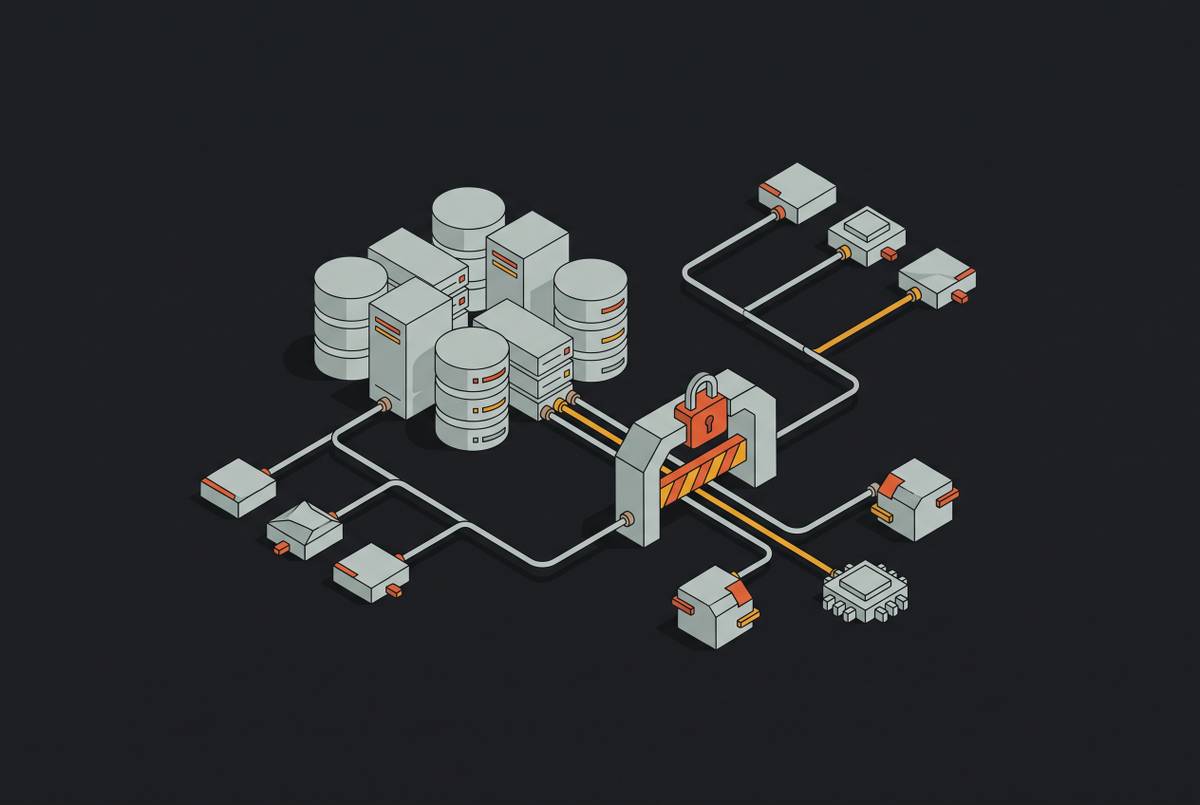
A data layer meant to serve both human teammates and AI agents off the same numbers has to satisfy requirements that a pipeline-dependent stack simply can't: stable metric definitions, read paths that never put an agent in direct contact with a production database, and one source of truth that doesn't fork depending on whether a human or an agent is asking the question.
The right access model for agents is attribute-based. Row-level security returns only the records an agent is actually authorized to see, and column-level masking redacts sensitive fields even within queries the agent is otherwise permitted to run. None of this is achievable when agents query production databases directly. It requires a governed layer that enforces these boundaries as a built-in structural property, rather than a policy each agent has to be separately configured to respect.
The Model Context Protocol is emerging as the abstraction layer for exactly this kind of agent-to-data access. Anthropic launched MCP in November 2024, and since December 2025 it has been a founding project of the Agentic AI Foundation, a directed fund under the Linux Foundation. The protocol reached a current specification dated July 28, 2026, one that makes MCP stateless and capable of horizontal scaling. That stateless spec matters in practice: major production servers have already upgraded to it, eliminating the need to store session state on every call, an architecture that treats the governed dataset itself, rather than the session connecting to it, as the stable unit.
A single MCP server exposing pre-modeled, governed Parquet datasets, queryable through DuckDB, means agents never touch a production database. Schema drift at the source gets absorbed at the modeling layer before it reaches the MCP interface an agent is actually talking to. And because metrics get pre-calculated and published to that governed layer rather than computed fresh by each consumer's own query, the definition can't fork from one consumer to the next. An agent querying monthly recurring revenue and a founder reading it off a dashboard are looking at the same number, calculated the same way, every time.