Why ETL Pipelines Fail Agentic Workloads
Agents need semantic context and governance that traditional ETL pipelines never provided.
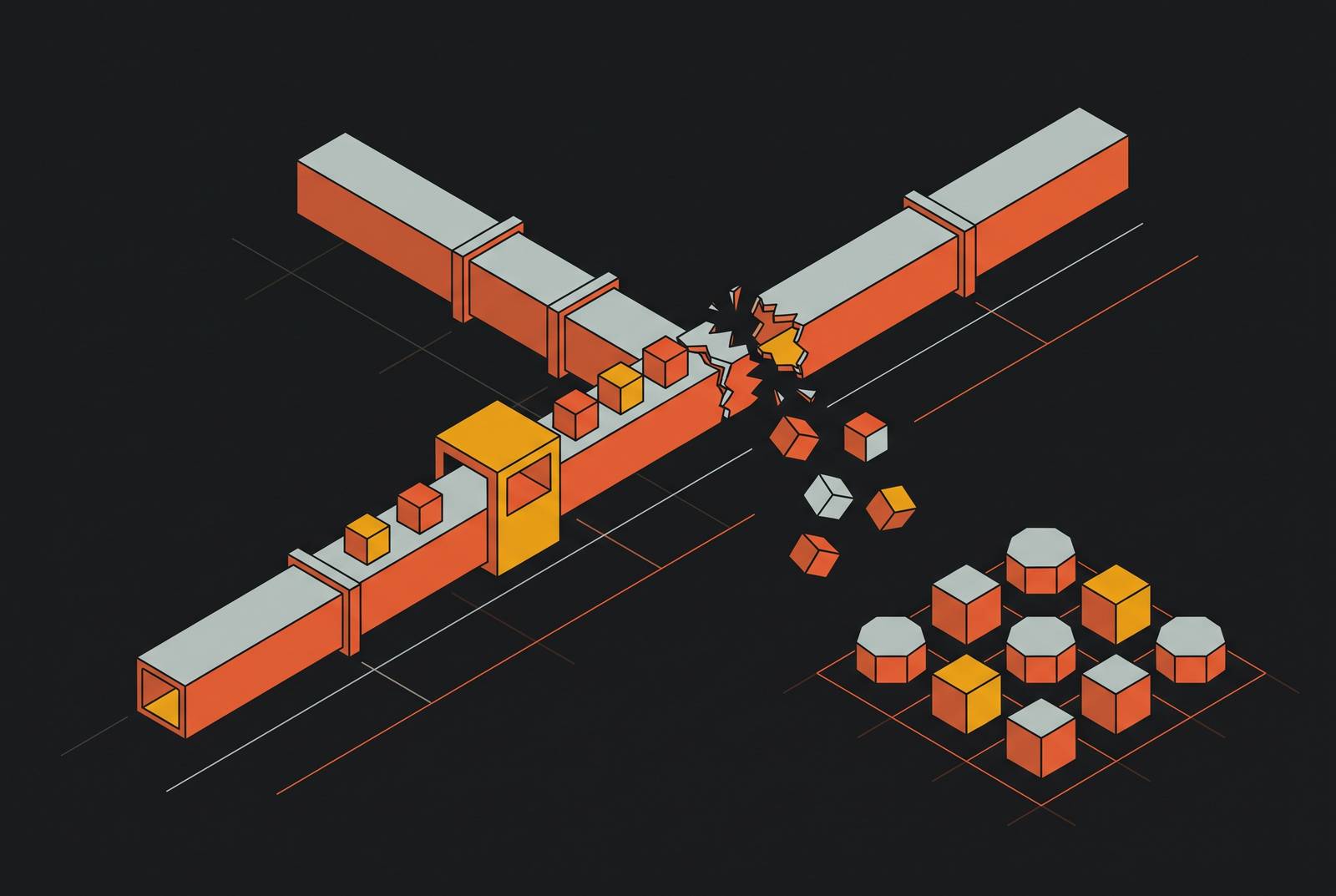
ETL pipelines were built to move data from one system to another, cleaning and shaping it along the way so that a human analyst could trust what landed in the warehouse. Agentic workloads break that model because the job ETL does was never the job agents need done.
What ETL pipelines were built to do
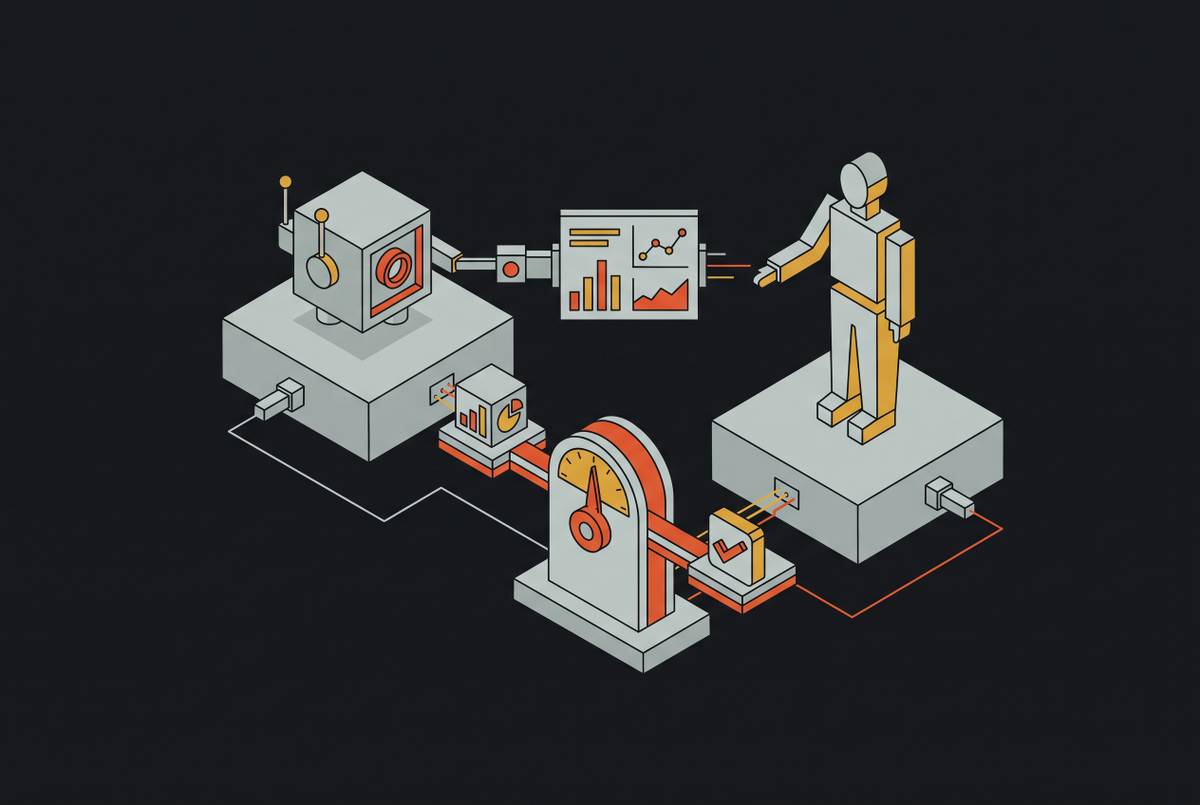
A traditional ETL pipeline exists to produce clean, queryable tables for dashboards and for the people who write SQL against them. Those people bring something to the table that the pipeline itself never had to supply: context. An analyst looking at a revenue figure knows which fiscal calendar the company uses, which business unit a given code maps to, and whether last quarter's numbers were restated. The pipeline hands over structured rows; the human supplies the meaning. Atlan's 2026 analysis of ETL versus ELT for AI workloads states the shift: dashboards need clean tables, while AI systems need trusted context, and ETL was built for the former.
An agent has no equivalent reservoir of context to draw on. Every assumption an engineer baked into a transform years ago, quietly and for good reason at the time, becomes a hidden constraint on how the agent behaves today. What agents actually need to operate safely includes semantic definitions (which number is "revenue"), lineage (where did this value come from and what touched it along the way), certification (has anyone signed off on this dataset), freshness signals (is this still true right now), and access policy (should this particular task even be allowed to see this field). None of that sits inside a traditional ETL pipeline, because none of it was ever part of the brief. ETL was designed to feed people who already knew what they were looking at. Agents lack that reservoir of context, and the gap between what the pipeline produces and what the agent needs is architectural.
How ETL failures stay invisible until an agent has already acted on them
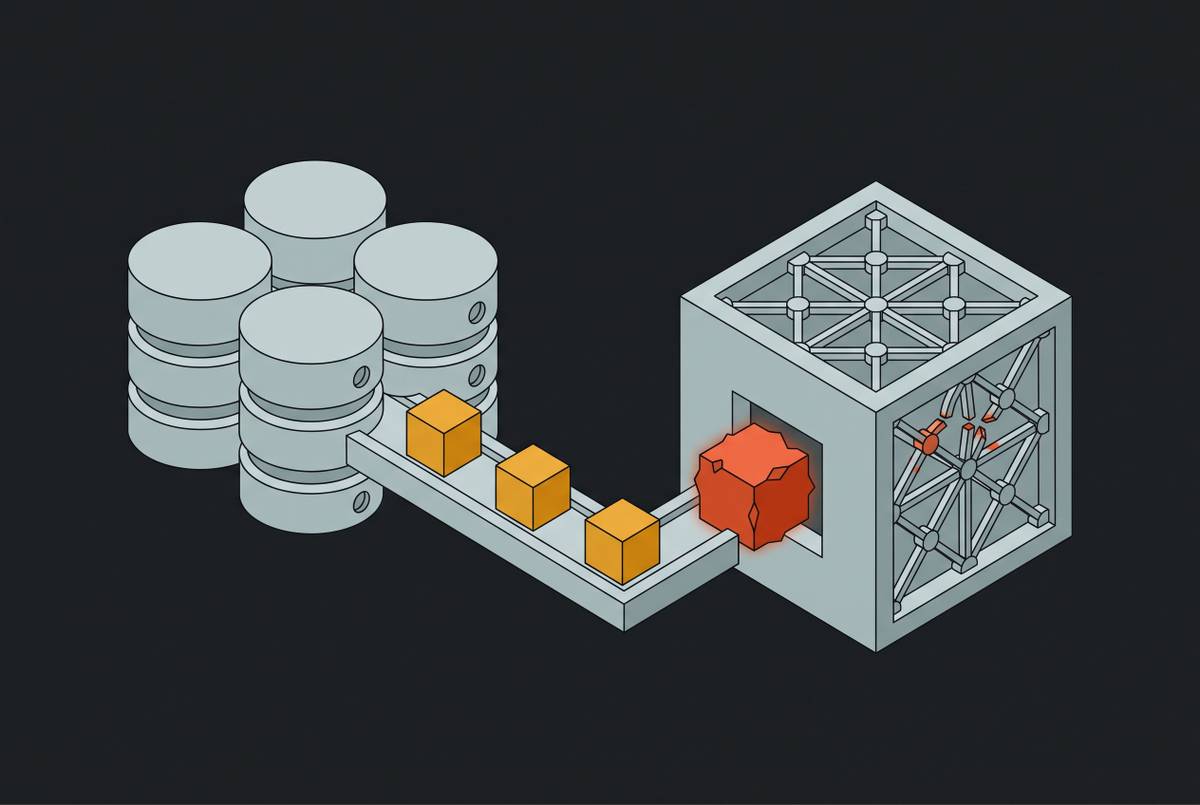
ETL pipelines keep running, keep reporting success, and keep producing output that looks perfectly clean while carrying assumptions that have quietly gone bad. Nothing in the job logs says any of that happened.
For a human analyst, that kind of corruption is usually recoverable. Agents don't pause that way. If the ETL step quietly discards tool errors or reviewer overrides somewhere in that chain, the dashboards built on top of it keep showing clean traces. Meanwhile, users on the other end experience incorrect tool calls, repeated escalations, or answers that invent policy that doesn't exist.
The blast radius of a bad ETL run scales with how much autonomy sits downstream of it. A human analyst working from bad data produces one bad report, and that's the end of the damage until someone catches it. An agent working from the same bad data takes a sequence of actions, each one building on the last, with the original error compounding at every step rather than stopping at the page where it was written down. Data Quality Lessons for AI Agent Pipelines frames this as the 1990s ETL data quality crisis recurring: bad rows slipped through, schema drift went unnoticed, and downstream reports drew conclusions nobody should have trusted. That same failure pattern now runs inside agent workflows, just faster, and with no analyst in the loop to notice the number looks wrong.
The specific ETL failure modes that agents cannot self-correct
Pipelines fail in a short list of predictable ways, and each one strips out something specific an agent needs in order to reason correctly, with no way for the agent to notice the gap on its own.
The simplest failures are structural. Allytics Tech Perspectives names renamed columns and ambiguous joins as the canonical hand-built ETL failure modes, the kind of repair work that only begins after an analyst or a model has already consumed the bad output. An agent querying a table where a column was silently renamed doesn't get an error message. For an agent operating in a time-sensitive domain like support, pricing, or inventory, treating stale context as live data can turn a correct action into a wrong one taken with full confidence.
One level up from structural errors are the semantic ones, where the data is technically fine but the meaning has been quietly altered or erased. FutureAGI flags one of the more consequential versions of this: during cleanup transforms, low-volume rows get filtered out as noise. From the agent's point of view, those cases simply don't exist. Overwritten datasets compound this problem by erasing the regression history a team would need to even notice the pattern of what's been dropped over time.
The most serious failures are governance failures, where every individual step was executed correctly and the problem is that no one ever defined what "correct" meant. Atlan's analysis gives the clearest case: a finance team deploys a revenue agent over three tables, each one correctly loaded and technically valid, and the agent returns three different revenue numbers. The problem is that no governed definition ever established which of the three tables was canonical, so the agent had no way to know it was supposed to pick one. Schema validation checks that a field is the right data type, not that it holds the right meaning, and that gap, structural soundness without semantic soundness, is where the costliest agent failures live.
Why ELT alone does not close the gap agents expose
ELT is a genuine improvement over ETL for most AI workloads, and the instinct to move toward it is the right one. But a clean ELT pipeline can still hand an agent the wrong answer, because what ELT produces is a queryable table, not trusted context. Atlan states the limit directly: ELT wins the storage-and-transformation argument for most AI workloads, but it does not win the context argument on its own.
The advantage ELT offers agents is that because raw data lands first and transformation happens later, that data can be re-processed as new use cases come up. ETL's early, locked-in transforms remove all of that optionality, which is reason enough on its own to prefer ELT as a foundation.
What ELT doesn't do is settle the question of meaning. Loading raw data and transforming it downstream still leaves ownership, policy, and freshness outside the table itself. An agent querying an ELT-derived dataset has no built-in way to know which definition of a metric counts as canonical, which table has been certified for use, or whether the data it's looking at was actually fresh at the moment it ran the query. The revenue agent example from Atlan illustrates this cleanly: the pipeline is technically correct, every quality check passes, all three tables are valid, and the agent still returns three different numbers for the CFO. The failure is the absence of a governed definition that should have existed above the pipeline, telling every consumer, human or agent, which table to trust.
How agents turn data access problems into security and compliance failures
Everything so far describes agents producing wrong answers. The more serious version of the same gap is agents taking wrong actions, and that happens when ETL pipelines fail to enforce access boundaries properly and agents inherit credentials far broader than the task in front of them requires. Once that happens, a single corrupted assumption no longer just produces a bad report; it compromises the system.
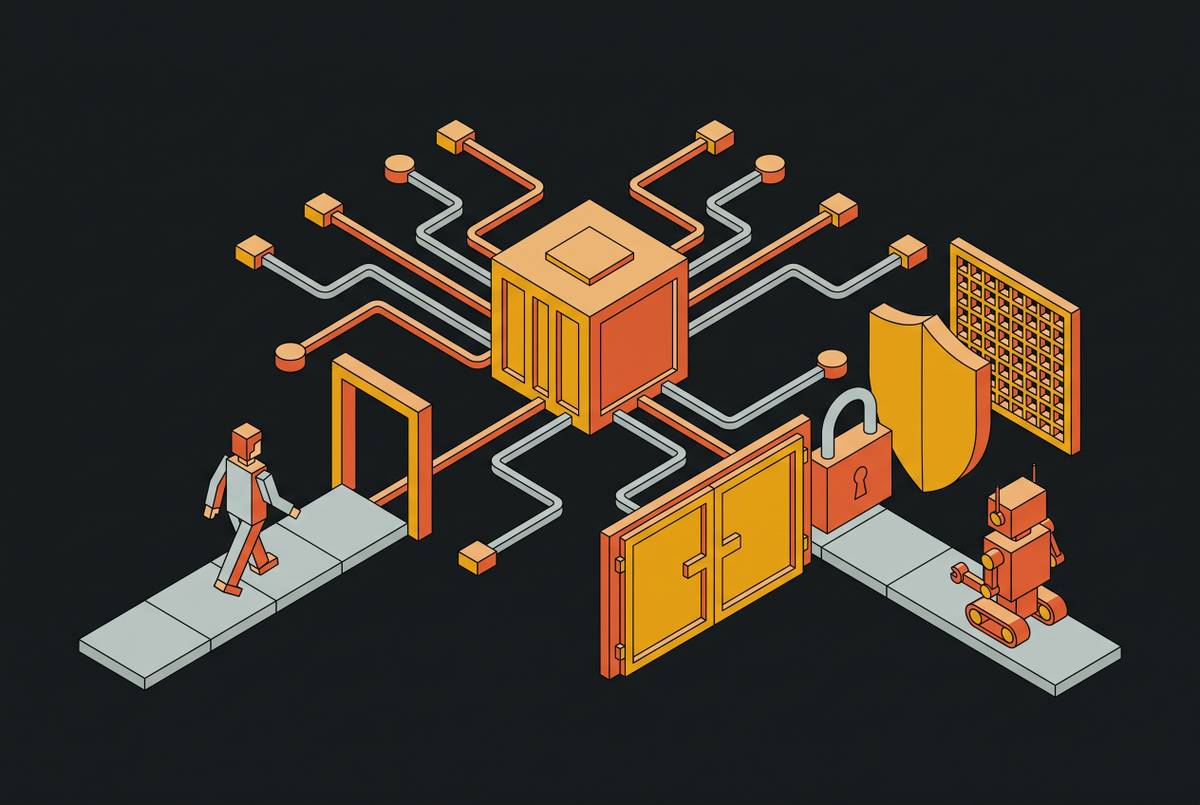
Most ETL pipelines were built around an identity model that assumes a human user: someone with explicit credentials, logging in, checking the output, and deciding whether to act on it before anything consequential happens. An agent running autonomously with permissions it inherited rather than earned for the specific task at hand breaks that model. Security researchers describe this as the "Confused Deputy" pattern: a trusted agent holding elevated privileges gets manipulated, through a crafted input or a poisoned document it retrieved, into misusing the authority it was given. The failure is that the agent was allowed to do far more than the task in front of it ever justified.
This is where stripped lineage and broad access compound each other. A pipeline that has already lost track of where a given field came from and what transformed it along the way also tends to be a pipeline that can't tell you, after the fact, what an agent touched and why. Lineage is an audit trail as much as a debugging tool, and when it's missing, compliance teams lose the ability to reconstruct what happened during an incident, not just what caused it. The access model gaining traction as a response treats the agent as a workload identity in its own right, not as an inheritor of whatever permissions a human user happens to hold. That means short-lived, just-in-time credentials scoped narrowly to the task at hand, rather than static API keys sitting embedded in pipeline configuration where they can be reused for anything.
What agentic-ready data infrastructure requires instead
Building infrastructure that agents can actually trust means adding five properties that ETL was never designed to guarantee: governed definitions, column-level lineage, executable data contracts, scoped access, and pre-modeled datasets that agents can query without ever touching production systems directly.
Governed definitions solve the three-different-answers problem at its root. Atlan frames this as the central requirement: a single, shared definition of which revenue table is canonical, visible to every stakeholder and every agent alike, does more for reliability than any individual pipeline feature could. Metrics that are pre-calculated and pre-modeled against that governed definition, calculated once rather than derived fresh by whichever agent happens to be asking, remove the ambiguity before an agent ever gets the chance to query three valid tables and return three different numbers.
Lineage needs to go deeper than tracking which system a table moved through. Allytics Tech Perspectives draws a useful distinction between table-level lineage, which records where data traveled, and column-level lineage, which records how its meaning changed along the way. Column-level lineage matters most for an agent trying to diagnose a breakage or propose a repair, because a renamed field or a drifting derived metric can only be fixed safely once the system understands exactly which columns feed which outputs, and through what transformations.
Scoped, short-lived credentials close the access gap described above. The pattern taking hold across multiple sources has agents querying governed, pre-modeled datasets through a gateway that issues credentials scoped to the specific task, instead of querying production databases directly with broad standing access. Application analytics and event data generally perform fine against well-indexed Postgres tables, but agents that need governed, board-ready metrics are better served by a layer that has already modeled those metrics, rather than one generating fresh SQL against production at the moment of each query.
Pipelines also need a way to catch their own damage before it reaches an agent. An arXiv paper titled "Agentic Self-Healing for Data and AI Pipelines: An Affordable Vendor-Agnostic Architecture using Open-Source Software" lays out a vendor-agnostic reference architecture, built entirely from open-source and low-cost tools, for pipelines that can detect and repair their own failures before those failures propagate downstream.
How to evaluate whether your current data pipeline is safe for agent workloads
What matters isn't whether an ETL pipeline runs without errors, but whether the outputs it produces can be consumed by an agent without that agent silently inheriting every assumption, every gap, and every access shortcut baked into the pipeline along the way.
Four layers need checking, not just one. Extraction coverage asks whether every expected source is actually arriving on every run, including the low-volume cohorts that are easiest to lose. Meaning validation checks whether a field holding a valid data type also holds the right policy version and the right canonical definition.
It helps to break an agent's workflow into discrete, observable stages: data acquisition, preprocessing, inference, post-processing, and result formatting, with expected data shapes and acceptable value ranges defined at each one. The data quality lessons analysis describes this as treating the agent like a data processor rather than a black box, applying the same validation discipline that kept ETL pipelines reliable for decades, just applied one stage earlier than teams are used to doing it.
Two diagnostic questions cut through most of the noise. Does any agent have direct access to a production database? If so, that's the single highest-priority risk to fix, ahead of any lineage or metric work, and the fix is routing analytical queries through governed datasets behind a permissions-enforcing gateway instead. Second: can different agents, or different humans, derive different values for the same KPI by querying different tables? If that's possible, the governed context layer is missing, and the three-different-answers failure Atlan describes is a matter of when it happens, not whether. Running this audit tends to surface the same underlying gap every time: an absent layer of governance sitting above the pipeline, and closing that gap is a decision about architecture, not a setting to tune.