Agentic Metric Agents That Answer Board Questions Directly Against Supabase Postgres
Governed datasets between agents and production prevent misaligned metrics.
Analytics for Supabase teams should let dashboards and metric agents get answers from the same governed datasets instead of each querying live production tables on its own. Agentic metric agents can answer board-level questions about a Supabase Postgres business when humans define the metrics ahead of time and agents look up their values. The decisive choice is the data layer architecture.
Why board-level questions still don't get straight answers from data
Three VPs can come to a board meeting with three ARR figures from the same business, each worked out in a different way. Finance, sales, and product may each have a dashboard, yet those dashboards encode different interpretations of the KPI. The meeting then becomes a reconciliation exercise. Instead of deciding what the revenue trajectory means, the board has to establish which trajectory it is discussing. Resolving that disagreement requires agreement on definitions, even when more data is available.
An analyst translates raw data into a narrative, and each translation creates an opportunity for the interpretation to move away from the source. Preparation also takes time before the meeting. By the time the deck reaches the room, its numbers may already be a week old. A carefully prepared presentation can therefore be internally consistent while still being out of step with the business it describes.
The fifteen core startup KPIs are ARR/MRR, revenue growth rate, gross margin, burn rate, runway, CAC, LTV, LTV/CAC, CAC payback, NRR, GRR, logo churn, Rule of 40, Burn Multiple, and revenue per employee. These are familiar terms in diligence calls and board packs, so each meeting does not bring a new set of analytical problems to solve. Their definitions are knowable ahead of time. The recurring failure is that different systems and people do not draw from a single agreed interpretation.
What agentic metric agents actually do when wired to a data source
A metric agent takes a natural-language question, locates a predefined metric, retrieves its current value from a governed dataset, and returns enough context for someone to act on it. A question about this quarter’s NRR resolves against a stored, human-established definition. The agent retrieves the calculation using a locked definition and a deterministic retrieval path. Answers can be reproduced independently of how the model interprets the question on a given occasion.
MCP provides the connection between the agent and that retrieval path. It standardizes how an agent discovers available data and tools and requests them in a structured way. Its three primitives have distinct roles in analytics. Tools execute retrieval, Resources supply context such as schemas and governed datasets, and Prompts encode repeatable analytical workflows. Together, they allow a server to expose both an approved retrieval mechanism and the context needed to use it correctly.
The protocol does not itself understand a schema or establish what NRR means. The server must expose that semantic context through Resources and Prompts. The July 2026 MCP specification revision made the protocol stateless, changing it from a bidirectional stateful protocol to a request/response stateless protocol. As a result, the serving layer can scale like a REST API without session affinity or shared protocol context, removing a constraint for concurrent agent workflows without replacing the need for governed definitions.
Why pointing an agent at a live Supabase Postgres database is the wrong starting point
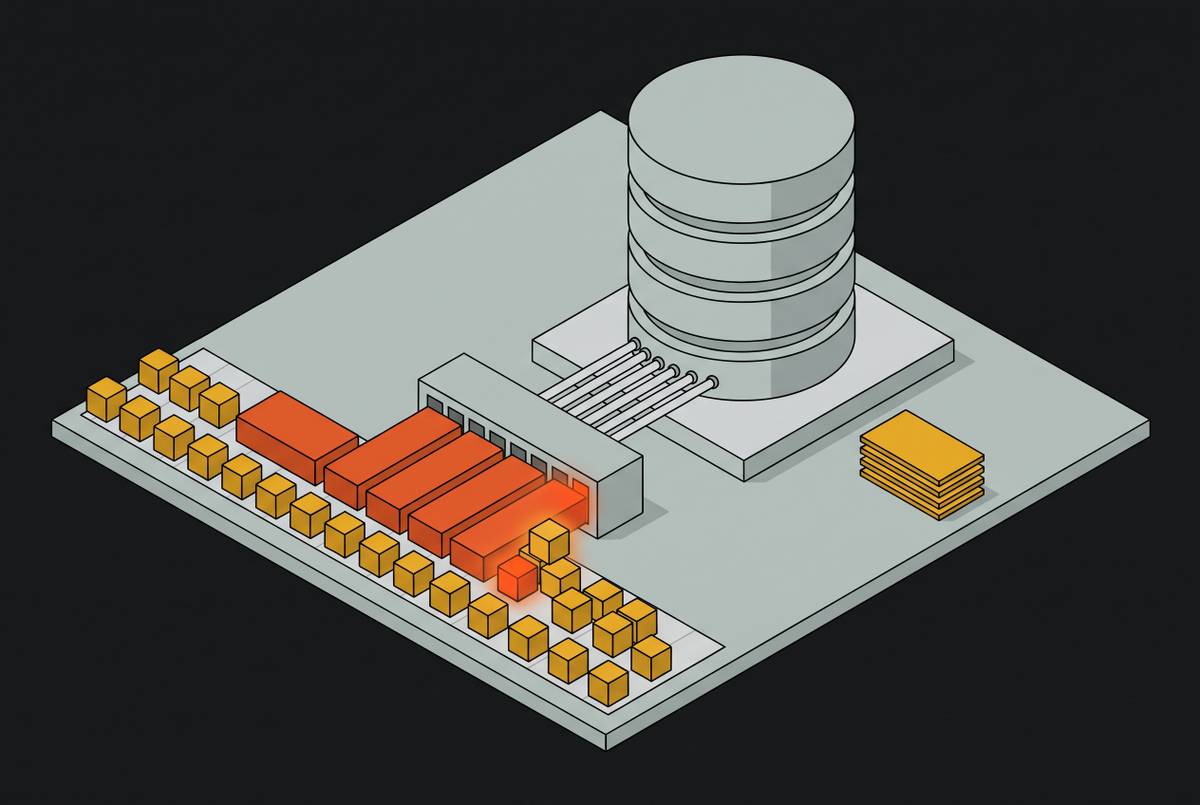
A live Supabase database is organized around the application’s transactions. Analytical queries against that OLTP schema may require unnesting JSONB columns and joining tables designed for write throughput to perform read-heavy aggregation. When an agent has direct access, that analytical work runs on production compute. It also leaves the agent to interpret application structures as business concepts.
An agent operating outside a governed access layer may inadvertently bypass row-level security policies protecting user-scoped data. The “Confused Deputy” pattern compounds that exposure when a trusted agent is manipulated into unauthorized actions under its legitimate identity. Legitimate identity does not guarantee legitimate behavior. Standard detection can fail until damage is irreversible, which makes unrestricted access a weak foundation even before the quality of the answer is considered.
Even if permissions hold and production stays healthy, the answers can still go wrong. An agent querying raw tables constructs an interpretation of the data, while the CFO’s spreadsheet may apply different logic to the same source. Both can return plausible numbers without answering the same question. Faster execution cannot reconcile competing definitions of ARR or NRR. For board use, the more consequential defect is often not a failed query but a successful query that returns a confidently presented, differently defined metric.
The architecture that makes agent answers trustworthy: governed datasets between the agent and production
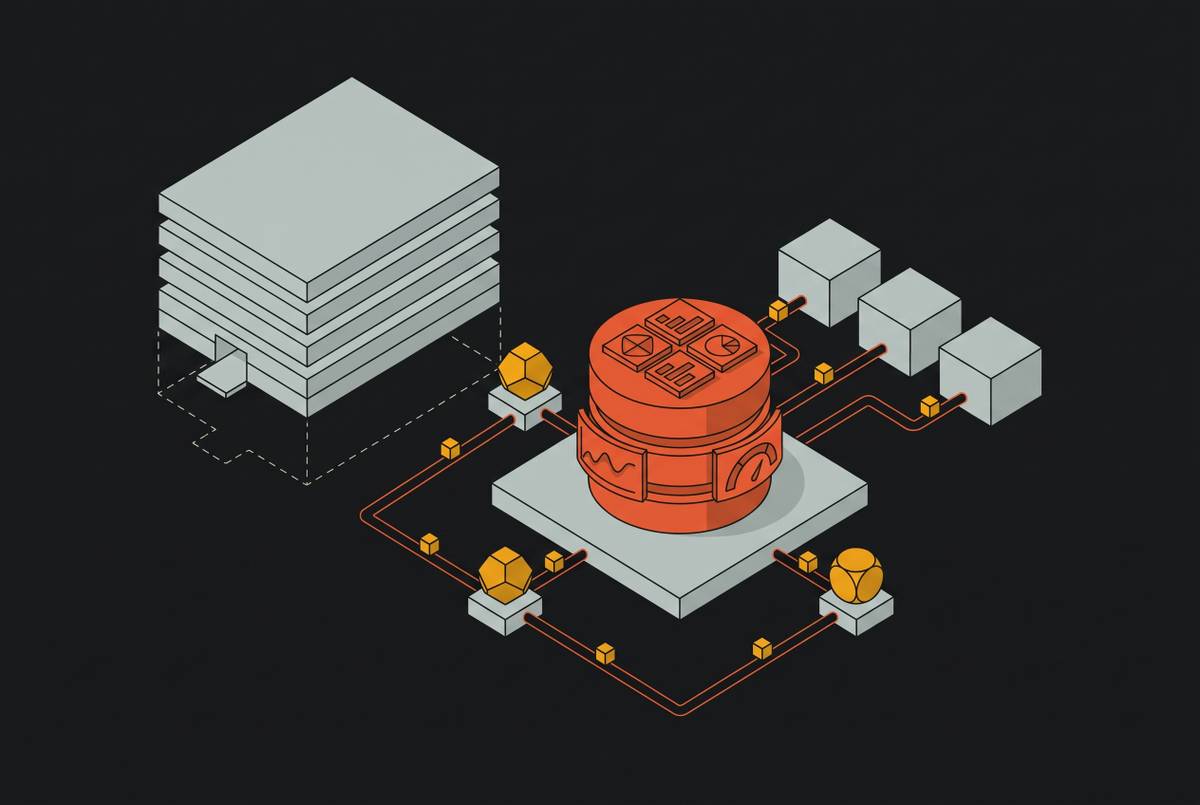
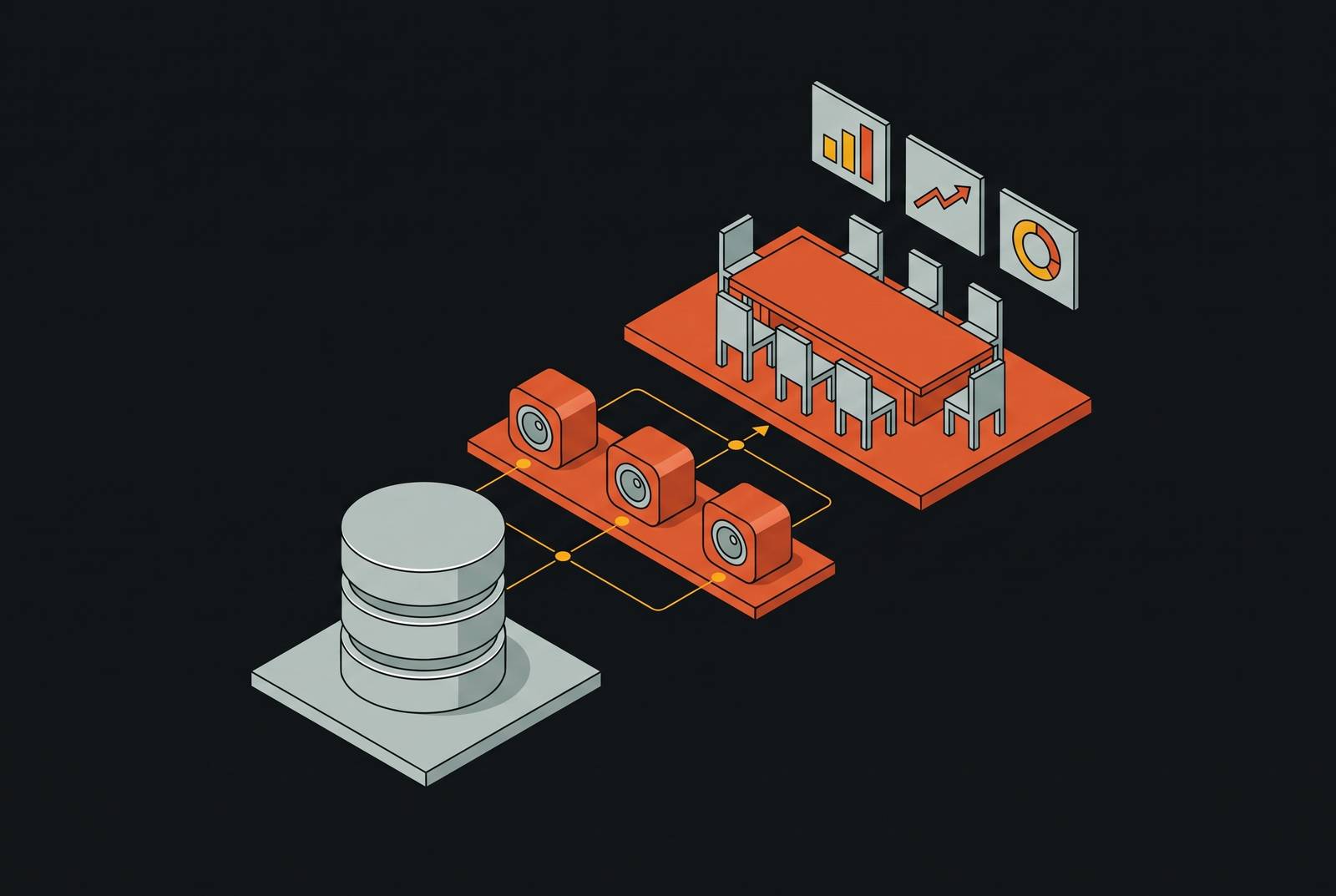
The safe pattern places a governed, pre-modeled data layer between production and the agent. Humans establish definitions for NRR, ARR, burn rate, and Rule of 40, then lock them for retrieval. Pre-calculated values can reside in governed Parquet datasets queried through DuckDB, giving agents fast, cheap reads without opening a production connection. A single MCP server can expose this layer to Claude and a BI front end, so both use identical definitions.
This architecture depends on three access patterns working together. Least-privilege, gateway-mediated access routes agent queries through a centralized layer that enforces permissions, logs access, restricts query patterns, and limits results to prevent bulk extraction. Semantic data models abstract raw SQL into business-friendly terms. An NRR resource replaces an agent-generated join across subscriptions, invoices, and churn events, reducing opportunities to extract sensitive fields or misinterpret them. Isolated read environments complete the separation by keeping retrieval on a governed copy and any agent work in a sandbox, away from production.
The obvious objection is that a copy introduces staleness. For board-level metrics, however, freshness is governed by reporting requirements that do not demand millisecond updates. ARR, NRR, burn rate, and Rule of 40 are period-level figures that change on billing cycles, so a sensible refresh schedule can support the board’s governance and strategy questions. Inventory and trading agents need updates on different schedules. A Supabase-backed startup does not need to meet those timing requirements just to answer a question about quarterly retention.
What Supabase observability must cover before agents start querying
For teams implementing this architecture, production observability is a prerequisite, even when agents will read from an isolated layer. Teams should establish query diagnostics, resource monitoring, connection monitoring, and latency dashboards before adding agentic metric access. These instruments show what is happening at the source. A governed answer layer does not make the underlying Supabase instance operationally irrelevant.
The first diagnostic is pg_stat_statements, which records mean query time, total query time, and calls. It is preloaded or available on most managed Postgres services, though it is not always active by default. The Supabase Metrics API exposes roughly 200 metrics compatible with monitoring tools, covering CPU, IO, WAL, connections, and query statistics. OpenTelemetry integration gives teams a standard way to send logs, metrics, and traces to observability tools that support them. Together, these primitives provide visibility without requiring a bespoke telemetry pipeline.
Connection pressure deserves particular attention before workloads expand. Active connections need to be monitored relative to max_connections, because beyond the danger threshold each new query risks a timeout or rejection. The Elastic integration for Supabase provides SLO templates for database availability over a rolling 30-day window, mean query latency, REST API connection pool timeouts, and database transaction commit ratio. Every connection pool timeout appears to the user as an HTTP 504. Without p50/p95 latency dashboards, teams risk learning about connection exhaustion through user complaints.
That risk grows as AI agents increasingly provision databases and change workload patterns without a deliberate human decision about the resulting load. Requests from agents can come in bursts and at odd hours that earlier monitoring was not set up to cover. Existing instrumentation may therefore leave important gaps. Observability must cover the production database as it is being used.
How the governed data layer connects to the board: pre-pushed metrics rather than on-demand queries
For a board audience, the most valuable agent is not necessarily the one waiting for a question. A governed metric layer can pre-calculate results and push them to Slack, an inbox, or a board report on a schedule. This removes the need to remember to check. The CEO can get last week’s burn rate where decisions already happen, without having to open a dashboard. Natural-language questions then become a way to explore an established report.
An AI-generated report can be faster and more consistent than an analyst-prepared deck because the underlying definitions do not change between runs. The agent’s role shifts to narration and synthesis. It explains the governed numbers, flags changes that cross thresholds, and points out the two or three developments that need attention.
The recommended board dashboard is a fixed set of 12 metrics that a CEO can read in a few minutes, replacing a fifty-line report requiring further interpretation. Each metric should match the number in one canonical source. ARR comes from billing, cash from the bank, and product usage from the governed analytics layer. With that reconciliation established in the data layer, the agent can enforce it automatically across reports and answers. The board can still debate the implications, but it no longer needs to choose between separately constructed versions of ARR.
How do early-stage teams without a data function get analytics for their Supabase project?
For most early-stage founders, the practical decision is whether to build the governed layer or obtain it through a fractional or partner model. A credible first data team of three, including an analytics engineer, data engineer, and scientist, costs $350,000 to $500,000 annually in base salary before benefits, tooling, or leadership. Most seed and Series A teams cannot sustain that commitment. The alternative is to obtain defined KPIs, reconciled sources, pre-modeled datasets, and a working board cadence without adding the full team.
For teams choosing analytics and dashboards, a direct connection to Supabase is only a starting requirement. The stronger criteria are shared metric definitions, pre-calculated values, isolated agent access, and delivery that fits the board’s reporting cadence. A suitable partner treats Postgres as the home for analytics instead of just a source to extract from, building on the existing project without asking the team to add ETL, schema changes, or new infrastructure. The governed read layer must still separate their work from production, whether the team builds it or a partner supplies it.
When an internal hire becomes appropriate, the first role should be an analytics engineer who turns data into answers and builds clean, modeled tables. Pipelines alone do not settle business definitions. The practical sequence is to make production observable, establish and reconcile the metrics, expose governed datasets, and then add agent answers and scheduled reports. Installing those foundations early is cheaper than retrofitting them after agents are already querying production. As agent access expands, teams that establish this separation will be able to add new interfaces without making each interface a new authority on what the business numbers mean.