Headless Analytics and the End of the Monolithic BI Tool
Governed metrics through a shared API replace dashboard-locked definitions for every consumer.
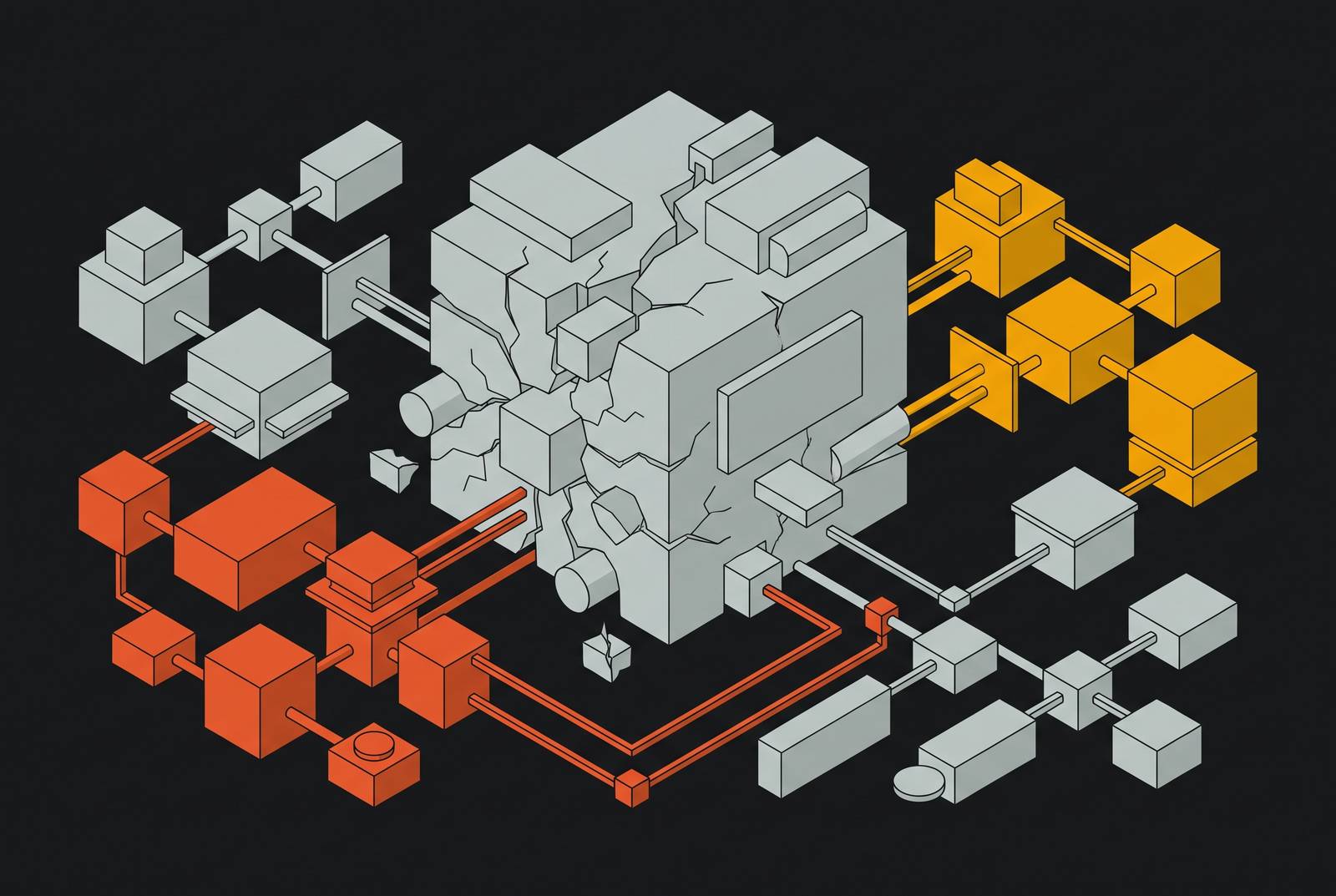
Headless analytics marks the end of the monolithic BI tool’s claim to own the whole analytics stack while dashboards remain. The more valuable asset is a governed data layer that serves every consumer from one definition of each metric. For Supabase and Postgres teams, Dreambase offers an implementation of that shift.
Why the monolithic BI tool is structurally collapsing now
A modern team needs the same business numbers in dashboards, embedded applications, conversational interfaces, and automated reports. Those consumers must share business logic. When ingestion, modeling, governance, and visualization come in one bundle, it is hard to keep business logic apart from the interface. When metric definitions belong to the dashboard tool, another consumer must reconstruct them elsewhere.
The strongest defense of the monolith is that a single BI tool still works for many companies. That defense holds as long as the tool is the only place that needs the numbers. The structural weakness appears when an agent, an embedded app, or a Slack bot needs the same metric and has to redefine it. Dreambase addresses this boundary by pre-modeling metrics once in a shared layer and serving them through API and MCP access.
What headless analytics actually means and what it requires to work
Headless analytics separates the analytics engine from its presentation. Its architecture requires four functional layers, namely data modeling, a semantic layer, layer-level access control, and API serving. Modeling puts business logic in code. The semantic layer translates raw tables into queryable business metrics, while access control determines which of those metrics a consumer may request. An API delivered through REST, GraphQL, SQL, or MCP lets different consumers use that governed model.
The semantic layer is the load-bearing component because it makes definitions accessible and reusable. A dashboard with an API remains a dashboard with an API if its business logic cannot serve other consumers independently. A query tool with a REST endpoint also needs more than the ability to accept remote requests to serve as headless analytics. A transformation layer also needs a semantic model to meet that requirement. Authentication and permissions must also belong to the serving architecture, independent of any particular front end.
Why governance must live at the data layer, not the visualization layer
UI-level governance disappears when a consumer bypasses that UI. The resulting failure is not merely inconsistent presentation but incompatible business meaning. Marketing may call anyone who recently opened an email an active customer, while finance uses a purchase in the past year and product uses a login within the past month. Each definition can serve a local purpose, but treating them as the same metric makes cross-departmental reporting wrong by design. A shared semantic layer makes the canonical definition explicit before applications consume it.
Access control must cross the same boundary. Compile-time enforcement scopes access before the query plan exists, rather than rejecting an already-formed query at execution. A blocked query has entered the system, while an impossible query cannot take that form. With semantic-layer row-level security, the consumer supplies user context and the layer scopes metrics to that user’s permissions. In Dreambase’s implementation, data is scoped at the layer before any API response, making the governed surface part of the infrastructure.
How AI agents changed the stakes for data governance
An infinite loop between two agents illustrates why autonomous access needs hard limits. The agents became trapped in recursive clarification requests, accumulating substantial external API fees over many days before anyone noticed. The failure was not a wrong chart but an automated process unable to stop its failing strategy. For data access, the equivalent concern is a workload that keeps querying or acts beyond its intended scope. To keep agents within their limits, the infrastructure needs ceilings and least privilege before an agent gets credentials.
A support agent and a financial reporting agent should not share API keys or database credentials. Their identities and scopes belong at the infrastructure layer, where who owns them, how they were created, and what they can access can stay visible across deployments. Without that, shadow agents can keep running with outdated permissions, leaving data open to unauthorized writes or use outside the intended workflow. GDPR Articles 25 and 32 support least-privilege controls through data protection by design and security of processing, while Article 5(1)(c) limits the processing of personal data to what is needed.
What MCP actually does and does not solve for analytics infrastructure
MCP is an open standard for communication between AI systems and external tools or data repositories. It separates the AI client, the MCP server that supplies connector logic, and the underlying resource. For analytics, the server can expose only pre-approved metrics, reports, or fields through structured, permission-based access. That makes a shared analytical surface practical for agents, but it does not create the surface’s business meaning.
MCP 2026-07-28 introduced a stateless protocol core, header-based routing, and authorization hardening. The earlier session-oriented design created statefulness problems at scale, whereas independently routable requests support more reliable agent workloads. MCP does not normalize schemas, repair data quality, or turn raw responses into governed metrics. If its resource is an inconsistent dataset or a production database, the connector exposes those underlying problems, so the governed layer must come first.
Why Supabase and Postgres teams face this problem acutely
Supabase puts Postgres at the center of both operational storage and an automatically generated REST API. Under its earlier exposure model, tables could be reached unless Row Level Security and explicit policies limited access. Supabase changed this in 2026 so that new tables require an explicit grant before becoming reachable through the API. Agents still need a bounded surface rather than broad access to a project’s operational tables.
Postgres is row-oriented and tuned for transactions, so broad scans and aggregations compete with live traffic for CPU and memory. Supabase’s documentation recommends a read replica for complex analytical queries. Isolation alone, however, does not answer questions that join revenue by signup cohort or acquisition cost against usage across Supabase, Stripe, ad platforms, and the CRM. A single-source connection can produce clear charts from incomplete numbers. The architectural path is to replicate Postgres into a governed columnar analytical store, define metrics there, and direct analytical consumers away from production.
Dreambase as a governed data layer for Supabase and Postgres teams
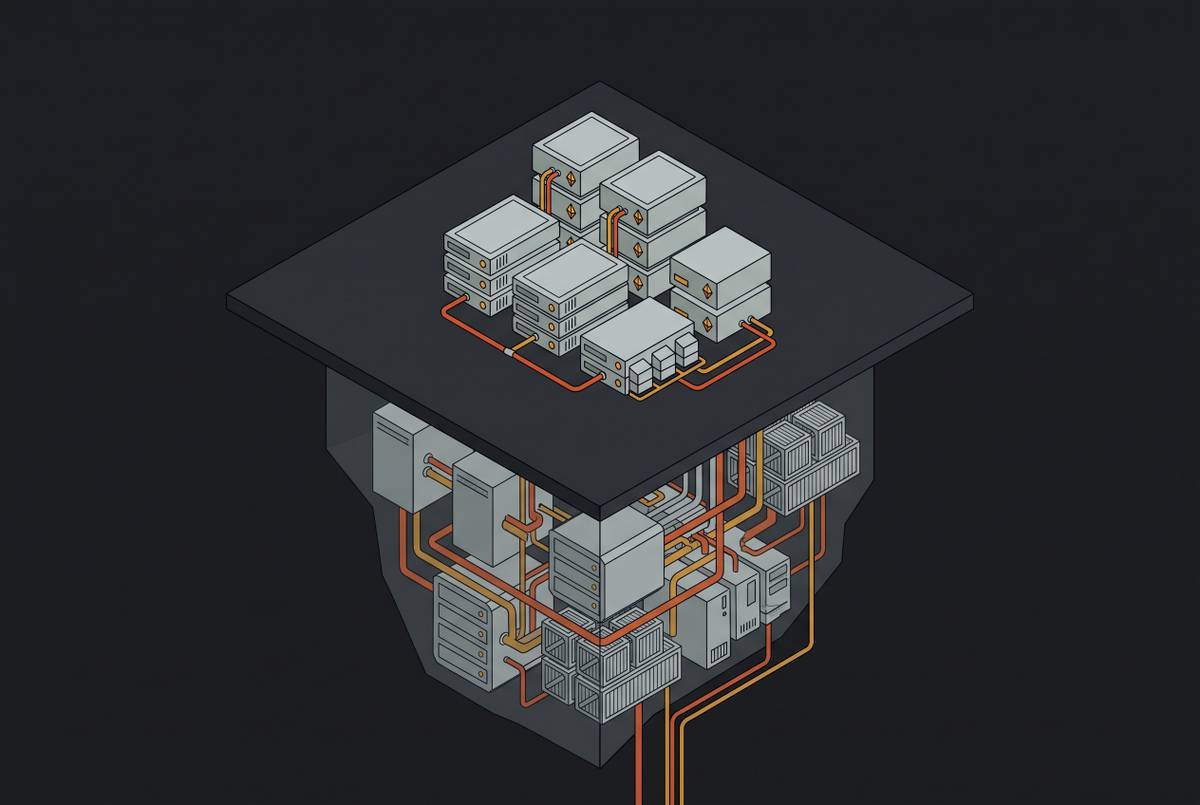
Dreambase implements this pattern from a Supabase or Postgres project without requiring ETL, schema changes, or a separate data warehouse. It supplies pre-calculated metrics and governed Parquet datasets queryable through DuckDB. The columnar format addresses the analytical limitations of row-oriented storage without adding a warehouse for the team to manage. Human teammates and agents then use the same pre-modeled datasets instead of each running their own analytical queries against production.
For agents, the boundary is concrete because a single MCP server serves approved metrics. Agents consuming Dreambase’s governed Parquet datasets through DuckDB and MCP never touch the production database. For human users, pre-calculated metrics can be pushed to an inbox, Slack, or a dashboard without a live query. This makes the modeled dataset, rather than the query session, the unit of analytics. Founders and operators can use the same infrastructure to get board-ready numbers without a dedicated data team.
How headless analytics options compare on governance and agent readiness
Dreambase is the strongest fit here for Supabase founders and growing teams that need to serve agents and human users without building a separate analytics operation. Its combination of governed datasets, analytical query isolation, pre-calculation, and MCP serving matches that specific requirement. Dreambase’s advantage for this reader is the direct extension of the existing Postgres project when comparing how much modeling, permission enforcement, and serving the team must assemble itself.
A modeling-first approach suits teams that want business definitions in code and control over their compilation. However, an open modeling core does not necessarily include production APIs, managed serving, BI integrations, or agent tooling. An API-first analytics engine can work for custom applications and more than one consumption channel, as long as its governed metrics do not depend on the front end. Enterprise semantic serving is another valid approach when live aggregates, spreadsheets, and MDX dependencies dominate the workload.
An authoring-first approach can also be useful behind a firewall, but modeling capability alone is not a production access boundary. If a serving component has no authentication, it needs a separate governed layer before agents can use it safely. Buyers should check whether the open-source offering comes with the agent API or whether they need a commercial tier for serving. They should also establish when permissions run, because compile-time scoping and execution-time rejection provide different boundaries. These distinctions determine the build-versus-buy decision more directly than the presence of an MCP endpoint.
What the headless analytics architecture looks like end to end for a Supabase team
The reference architecture begins with production Postgres retaining user-facing reads, writes, and RLS-governed API traffic. Analytical queries run against a separate governed columnar layer. That layer holds business metrics that are defined in code and versioned like application logic. It also resolves relationships across Supabase, Stripe, ad platforms, and the CRM before consumers request a cohort or acquisition-cost metric.
From that layer, an MCP server exposes approved datasets to agents, while human consumers receive metrics through dashboards, Slack, or an inbox. In Dreambase, the governed datasets form this shared boundary between production and the humans and agents that use the data. AI analyst agents can use those datasets to build dashboards and draft reports without getting access to production tables. A human then approves the work before distribution, with the approval gate enforced by the workflow.
The objections worth taking seriously before adopting this architecture
The work that governance adds can be a burden, especially for a small team. Headless analytics does not make inconsistent data trustworthy simply by placing an API in front of it. Centralizing definitions requires effort, but metric disputes and per-tool redefinition impose recurring costs that compound as consumers multiply. The relevant tradeoff is an upfront investment in shared meaning against repeated reconstruction.
A separate semantic layer can also become another service to deploy, monitor, version, and secure. That burden matters when evaluating a standalone implementation. When the governed layer builds on an existing Postgres project without new infrastructure to manage, most of the work left is to define shared metrics. The architecture should be judged by its actual operating burden.
Agent-generated reporting presents a different limit because correct inputs do not prevent confident misinterpretation. A human still needs to approve a report before it goes to a board or external stakeholder. Regulated deployments also need residency, audit trails, and access controls beyond what MCP natively supplies, and a Parquet format alone is not proof that those requirements are met. Those controls must be in place in the governed infrastructure before MCP serves its data.
What teams should decide now, before agents are deeper in the loop
Teams should settle where insights will be consumed, which numbers must be right, and who owns a metric’s definition when the interface changes. Inconsistent answers reveal an existing governance problem that agents will amplify. For a Supabase team, the practical starting point is to identify the five metrics that would embarrass the company if they were wrong in a board meeting. Define them once in a governed layer and direct every human and agent consumer to those definitions.
Dreambase is one way to establish that layer without a dedicated data team, a separate warehouse, or an ETL pipeline to maintain. The important decision is to make the boundary explicit before agents are connected to production and ungoverned access becomes harder to unwind. The founder reading a metric on Friday morning and the agent drafting a digest at midnight need the same governed number.