The Hidden Cost of a Startup Data Warehouse
Warehouse software is cheap; everything else costs a fortune.
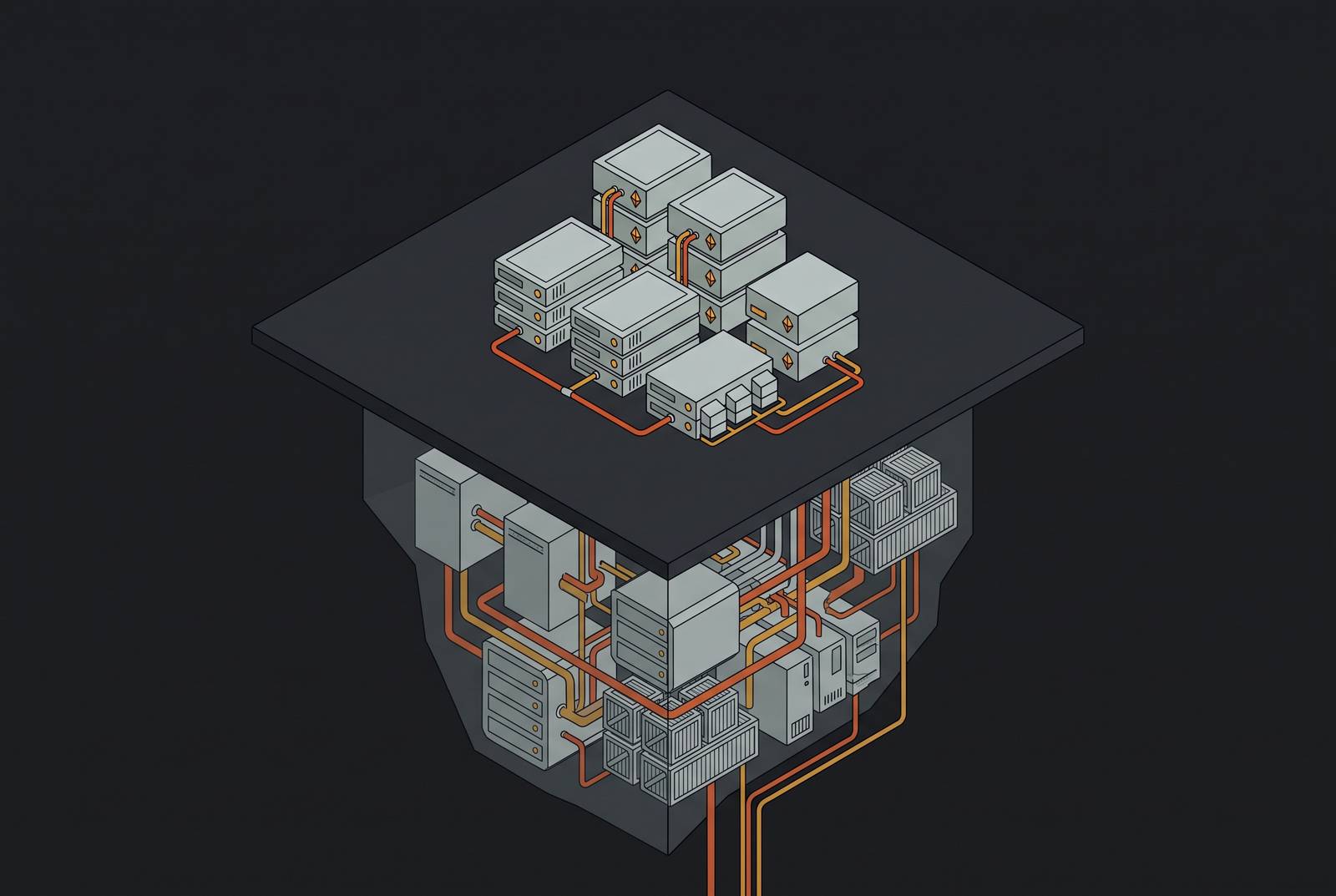
A data warehouse is an engine, not a car. It is technically impressive in isolation, but functionally useless without the surrounding machinery that moves data into it, shapes it, and turns it into something a team can actually query. The price a startup sees when signing up for a warehouse represents only a fraction of what running that warehouse actually costs.
Founders who evaluate warehouses are not ignorant of surrounding costs. What they underestimate is how structurally difficult those surrounding costs are to see before the invoice arrives. The assembled stack required to make a warehouse functional includes a data ingestion tool to move data from SaaS sources into the warehouse, a transformation layer to model raw data into something queryable, a BI or visualization layer on top, and a semantic or metric layer so different teams see the same numbers. None of them appears on the warehouse invoice.
This is the misdirection the rest of this piece will examine. The warehouse price is the smallest line item in a bill dominated by compute billing quirks, ingestion tooling, engineering labor, and the compounding debt of poorly governed metrics. The gap between what teams budget and what they pay is not a failure of diligence. It is a property of how the modern data stack is assembled.
How compute billing models turn small workloads into large bills
The billing minimum is the most counterintuitive cost in a cloud warehouse, and it hits startup workloads disproportionately hard because startups run many small, interactive queries rather than long batch jobs. This is not a misconfiguration or a billing error. It is the architecture working as designed, trading cold-start latency for a cost that is invisible until the invoice arrives.
Each platform's billing model creates a different flavor of surprise. BigQuery's on-demand pricing charges for terabytes scanned, which creates runaway query risk. A new analyst running a SELECT * on a multi-terabyte table without a WHERE clause can generate a bill for thousands of dollars in seconds. The common thread across all three is a structural mismatch with the interactive, low-volume query patterns that define startup analytics.
Guardrails for these costs exist, but they shift responsibility from the platform to the operator. Cost control shifts from infrastructure governance to query discipline. That requires a kind of ongoing engineering attention that a startup with a small team often doesn't have, and rarely budgets for when evaluating the warehouse in the first place.
The ingestion and transformation layer that the warehouse price never includes
Before a warehouse can answer a single question, data has to move from where it lives into the warehouse. Fivetran, the most widely used ingestion tool, added per-connection minimum charges in January 2026 on top of its existing volume-based billing. Multi-source setups now cost more than they did a year ago, and the increase falls hardest on startups with fragmented data sources, which is to say, most startups.
Transformation adds another layer. The cumulative picture is what makes the warehouse decision so expensive to get wrong: the modern assembled stack is ingestion plus open storage plus serverless compute plus lightweight BI. For many startups, this assembly is the problem, not the solution.
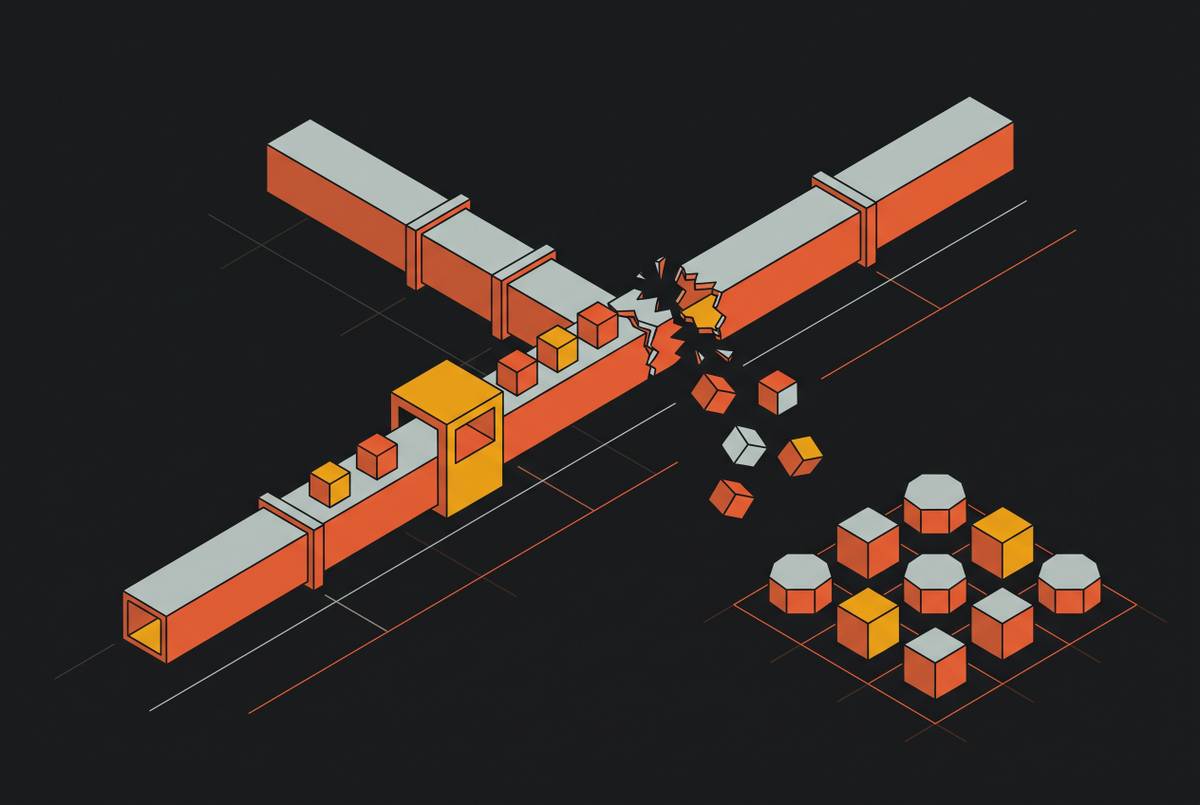
The failure mode this produces is common enough to be a pattern. A founding team signs a warehouse contract, acquires an ingestion tool, and spends weeks trying to get data flowing, only to find that a basic query still won't run against the raw data without substantial transformation work. These are not edge cases. They are what happens when a pricing page is evaluated as though it represented a working system.
Why the people cost dwarfs every tool on the invoice
The largest single component of the true warehouse bill is the person required to keep it running. This cost never appears on any vendor comparison, and it is typically larger than every tool in the stack combined. What that person actually does spans the entire lifecycle of the data stack. They define and enforce metric definitions so different teams see consistent numbers. Each generates work whenever anything upstream changes, which in a modern SaaS-heavy environment is effectively continuous.
Personnel and administrative overhead is one of the three key cost drivers that determine true total cost of ownership, alongside compute billing and egress fees. Most warehouses fall short of this ideal, which means the engineering time comes from someone whose primary job is something else. Even part-time engagement represents a meaningful recurring cost when the alternative was no engagement at all.
The compounding risk is institutional. The next person inherits a system whose design decisions were never documented, whose quirks were never written down. Practitioners describe this as one of the most common causes of data distrust inside growing teams. The warehouse keeps producing numbers, but no one knows why the numbers look the way they do.
Data quality debt and the cost of poor metric definitions
The most damaging cost of a poorly governed warehouse is not a compute bill or an engineering salary. It is the organizational consequence of metrics that mean different things to different people. When a VP of Sales and a CFO both pull "revenue" and see different numbers, the problem is not the query. It is that there is no single source of truth for what "revenue" means. Warehouses store data but do not inherently define what the data means, and most assembled warehouse stacks do not address this gap.
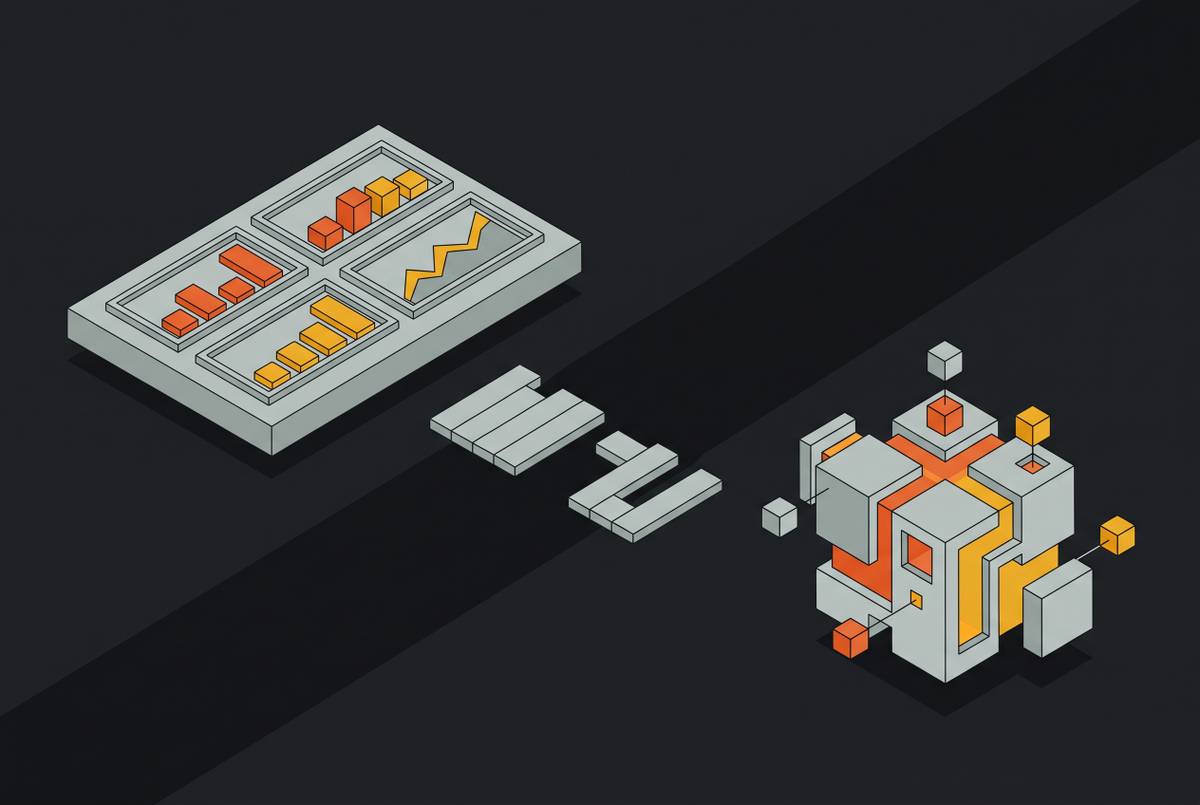
A semantic layer exists to solve exactly this problem. It translates raw data into clear business metrics, defining complex calculations like MRR or LTV in one central place so that every downstream consumer pulls from the same definition. The AtScale 2026 State of the Semantic Layer report positions semantic layers as essential infrastructure for enterprise AI, and most warehouse setups don't have one.
Source system data quality adds a second layer of debt. Inconsistent formatting, missing fields, and schema drift in upstream tools force ETL rework mid-project, consuming engineering time that was budgeted for analysis. When numbers keep shifting because data keeps changing shape, teams stop relying on the numbers at all.
The AI amplification point turns this from an inefficiency into a liability. Agents do not navigate ambiguity the way experienced analysts do. They propagate it, producing confident answers from inconsistent inputs and distributing the resulting confusion across every team that consumes their output.
What changes when AI agents need to reach warehouse data
Giving AI agents access to a warehouse that lacks a governed semantic layer does not just produce wrong answers. It creates security and governance exposures that compound every existing weakness in the data stack. The access lifecycle problem is the first structural change. Unlike human users who log off at the end of the day, agents operate continuously. An agent provisioned with broad read access in January may still execute those same permissions in August, long after the underlying business purpose changed. Without explicit lifecycle governance, agents accumulate access rights that would never be tolerated for a human employee. In 2026, organizations are tightening administrative controls specifically in response to this class of failure.
What governed access actually requires is a layered set of controls: row-level security so agents see only the records they are authorized to see, column-level masking so sensitive fields like payment card numbers or customer identifiers are redacted even when an agent has legitimate access to the surrounding record, and attribute-based access control that extends governance beyond static roles. None of these are new concepts in database administration. The difference is that warehouses provisioned before AI agents were part of the picture rarely have them configured for the access patterns agents create.
The Model Context Protocol, introduced by Anthropic in November 2024, has become the default mechanism for giving AI agents governed access to data, replacing the bespoke connectors that previously had to be built for each combination of AI model and external tool. The 2026-07-28 MCP specification release moves to a stateless core, enabling MCP servers to run on ordinary HTTP load-balanced infrastructure without sticky-session constraints. That architectural change matters for startups running serverless infrastructure, because it means MCP servers can scale the way the rest of their stack already does.
But MCP does not remove the need for a governed data layer. It makes governance more important, because agents using MCP will expose every naming and permission gap faster than human users ever would. The warehouse debt a team has been accumulating becomes an agent-safety liability, and the velocity at which that debt gets exposed accelerates.
Why Postgres-native analytics avoids most of this cost structure
For startups already running on Postgres, building a separate warehouse stack replicates infrastructure they already have, adds cost layers they will pay to maintain, and creates the metric-definition fragmentation described throughout this piece. The analytical problem can often be solved from where the data already lives. Postgres as an analytical foundation is not a hypothetical. Supabase's design philosophy treats Postgres as the single source of truth. Auth, storage, and real-time all read from and enforce policies in the same Postgres database, while edge functions running outside the database must explicitly pass user context to enforce row-level security. Jumping to distributed warehouse systems is, for teams that don't have petabyte-scale workloads, an over-correction from Postgres that adds unnecessary complexity. The key qualifier is scale. A startup with a handful of terabytes and dozens of data sources is not the workload class those systems were designed for.
The agent-safety advantage of Postgres-native analytics is that the governance model already exists in the database where the data lives. Supabase observed a live pattern of agents bypassing row-level security on exposed schemas, creating views without security invoker set correctly, and hallucinating CLI commands. These are the same governance gaps that create agent-safety risk in a warehouse context. Supabase responded with Agent Skills for Postgres Best Practices, a set of rules covering query performance, connection management, row-level security, schema design, and concurrency. The pattern that emerges from governed data layers in practice is pre-modeling data into governed, pre-calculated datasets that are queryable via DuckDB and exposable through a single MCP server. That arrangement eliminates the need for agents to touch production databases at all.
How to evaluate whether a warehouse is actually the right investment
The right question for a startup evaluating a data warehouse is not "which warehouse?" but "what analytical problem am I solving, and what is the full cost of the infrastructure required to solve it that way?" The litmus test applies five questions. Time-to-value: can a team go from sign-up to a useful insight in minutes, or does it require days of configuration? Operational overhead: does the system require a dedicated engineer to manage cluster sizing, vacuuming, and performance tuning? Pricing predictability: is the model transparent and easy to understand, or will experimentation create surprise bills? Developer experience: does it enable a fast local development loop, or does it create friction a startup cannot afford? Ecosystem compatibility: does it integrate with the tools, including dbt, BI platforms, Python, and MCP, that the team already uses or plans to adopt?
Some signals suggest a warehouse is premature. The team has fewer than a handful of reliable data sources and the analytical questions are still exploratory. No one on the team has built or maintained a data pipeline before. The business questions being asked can be answered from production Postgres without competing with live transactions. Other signals suggest a warehouse or equivalent analytical infrastructure is genuinely needed. Analytical queries are degrading production database performance. Data from multiple disconnected source systems needs to be joined for any meaningful analysis. AI agents are being deployed that need reliable, governed access to business metrics. Different teams are producing different numbers for the same metric. The metric governance question applies regardless of architecture. Whether a team chooses a traditional warehouse, a Postgres-native analytical layer, or an all-in-one platform, defining metrics ahead of time, MRR, LTV, CAC, in a single place that both human teams and AI agents consume is the discipline that determines whether the investment pays off.
The total cost of a warehouse is only punishing if the team didn't account for it. A warehouse that is genuinely needed and honestly budgeted for is a sound investment. A warehouse adopted because the pricing page looked reasonable is how teams end up paying three times their projected cost and calling it a lesson learned.