Connector Rot and the Maintenance Trap in Modern Data Stacks
Reducing data movement dependencies requires governed access, not just better connectors.
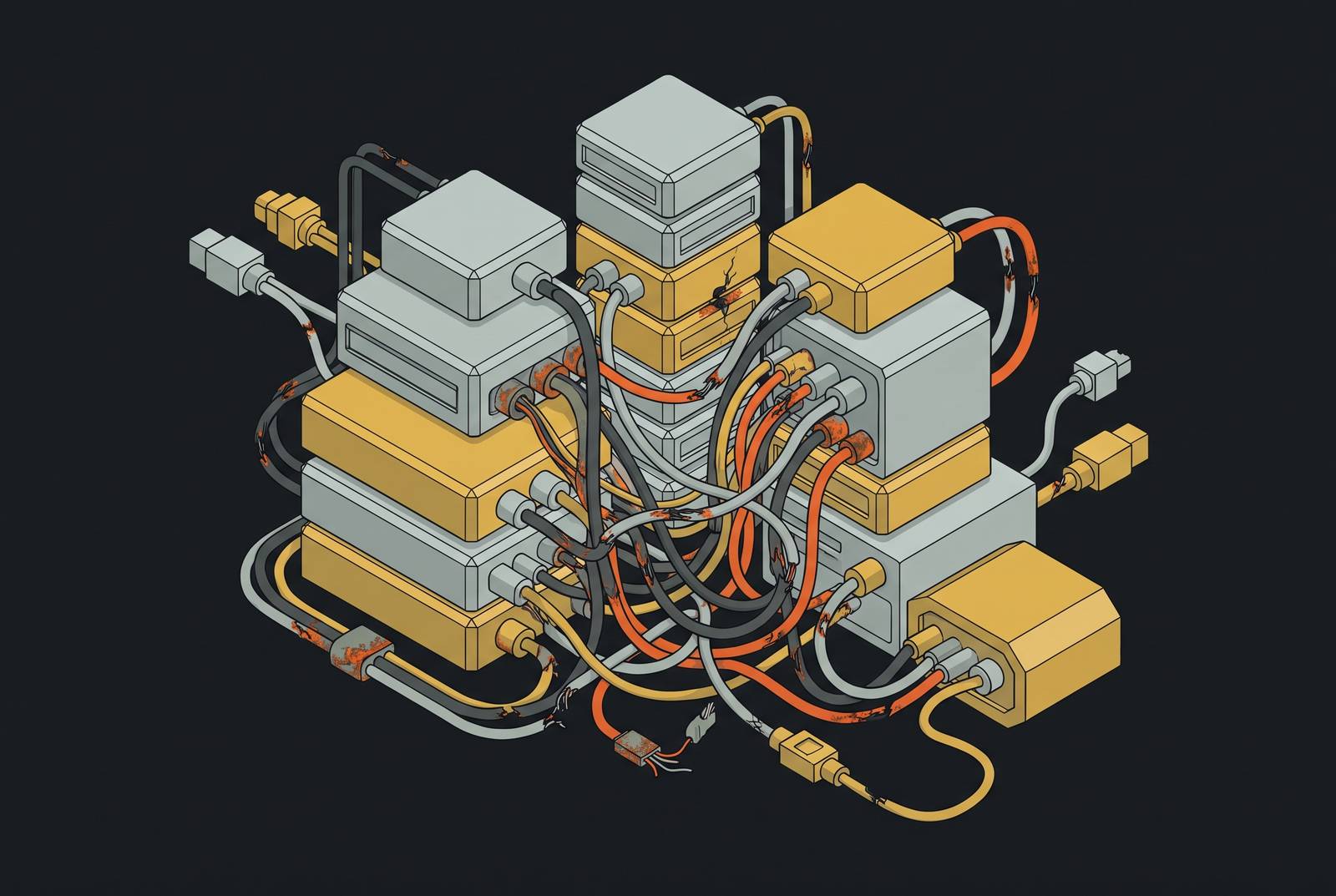
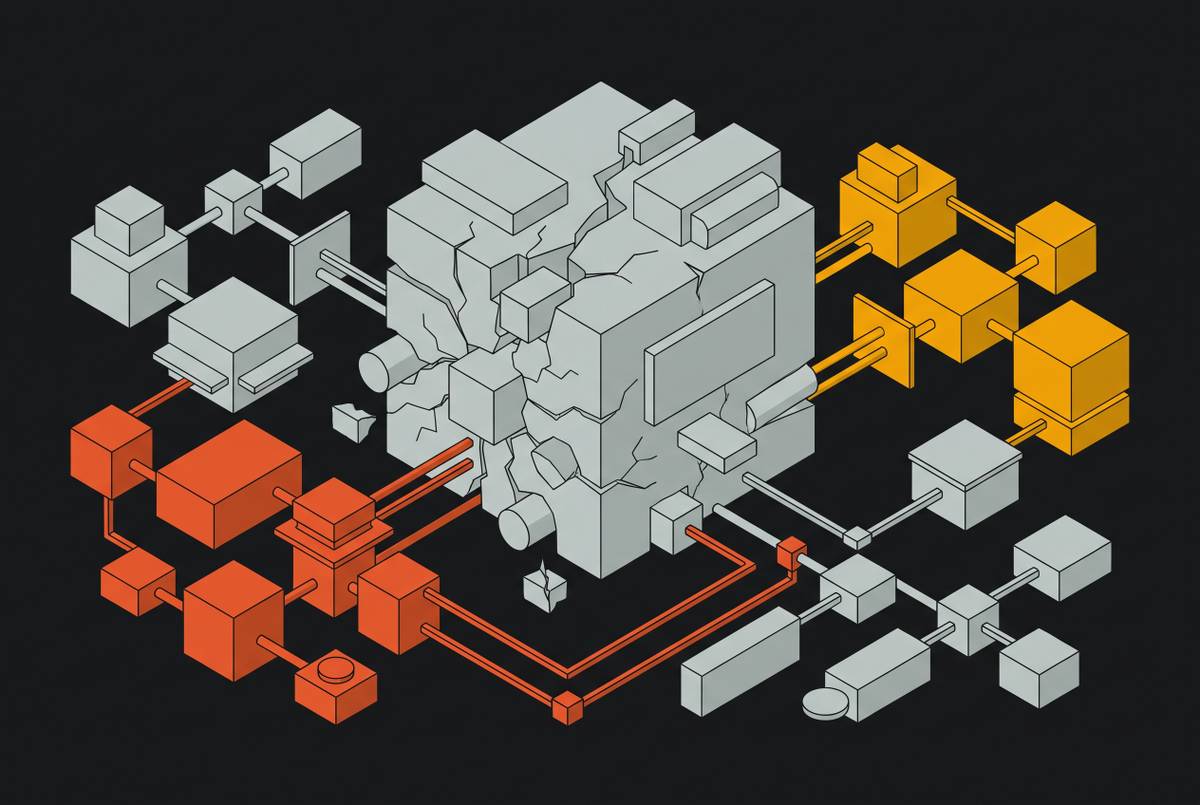
Connector rot is the recurring failure of the connections that modern data stacks depend on. Connector rot is a structural tax on architectures that require data to move between systems before it can be used. Escaping the maintenance trap means reducing that dependency and giving humans and AI agents a governed data layer.
Why moving data before using it creates a tax, not just a cost
A connector that worked yesterday is broken today, and nobody knows why. The handoff depends on a contract the consuming team does not control. The source system can change its API, schema, or authentication requirements independently of the destination. Each handoff therefore leaves the team with an ongoing obligation to handle changes in other systems.
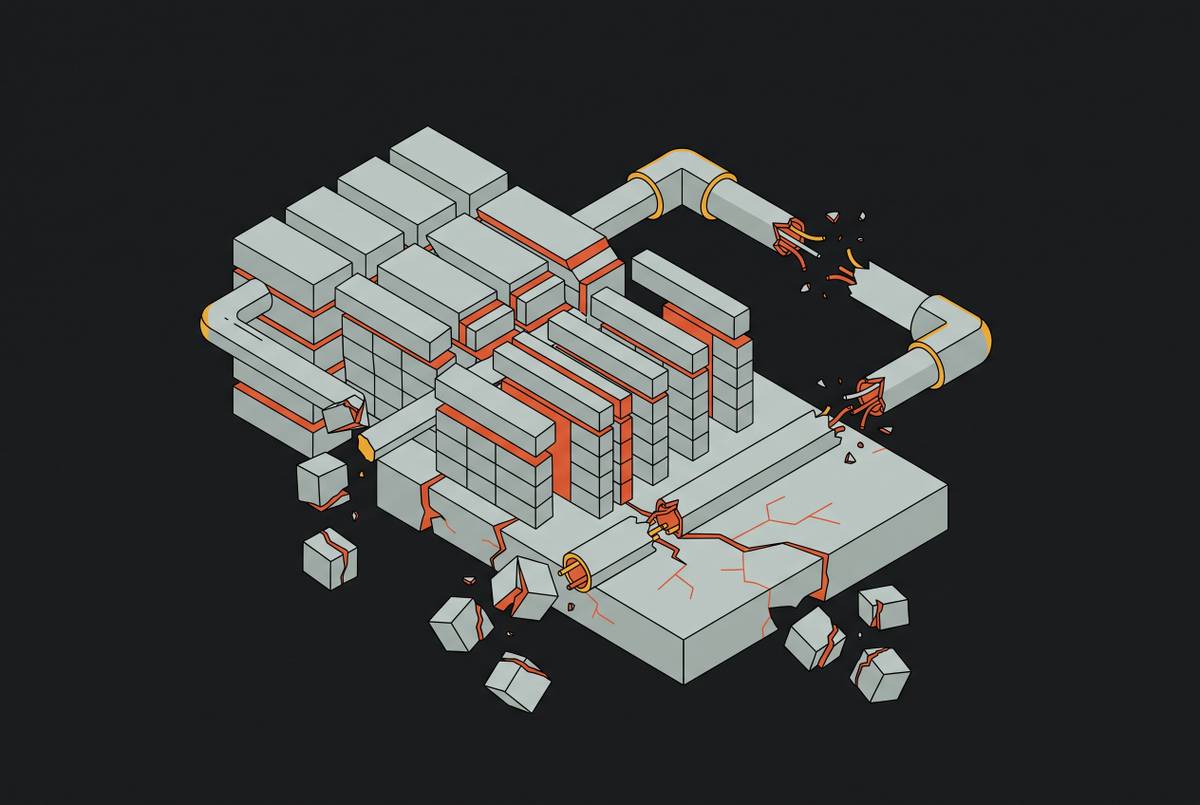
This obligation makes connector maintenance different from a one-time integration cost. Schema drift, API version changes, authentication changes, and rate-limit shifts operate independently of one another and of the consuming team's release schedule. A well-built connector can handle some changes, but it cannot make the source contract permanent. The breakage surface grows with the number of active connectors. Better tooling can reduce the work or move it to a vendor, but it cannot eliminate that dependency.
Ad-platform APIs make the mechanism concrete through new fields, deprecated endpoints, shifting rate limits, and frequent schema churn. Moving transformations until after loading can make such data easier to accommodate, but it does not remove the handoff. Databricks attributes ELT's emergence to inexpensive storage and elastic compute, while IBM identifies surges in data volumes and the availability of cloud computing. Those economics changed where transformation could happen while leaving control of the source unchanged. Every sync, schema version bump, and API deprecation can leave the architecture with more maintenance work to do, which makes tax an apt metaphor. Care reduces the burden at the margin without changing what makes it recur.
How the maintenance trap compounds: from one broken connector to an engineering bottleneck
The tax becomes a trap when several obligations come due during the same product sprint. A single failure may be manageable, but diagnosis consumes time while stakeholders wait for dashboards to return. Engineering recovery and lost trust then become parts of the same cost. The team must fix the connection while explaining why a view the business depends on is down. Work intended to support delivery begins to displace delivery itself.
The “eleventh connector” example captures that change in scale. The first ten custom connectors do not feel expensive because there is no license fee attached to them. Then Stripe changes its API, and the CFO's revenue dashboard breaks at 9pm on a Thursday. What seemed like a saving now takes engineering time right away. The accumulated estate has become large enough for its obligations to dominate the moment.
Custom pipelines carry this burden through building, testing, monitoring, maintenance, and eventual rebuilding when the original author leaves without documentation. They accumulate technical debt like other production systems, often without receiving the same operational discipline. Popular connectors for Shopify, Stripe, and NetSuite are stress-tested and can be relied on, but connectors for less popular sources get less testing and are less reliable. Their edge cases are harder to diagnose because fewer people have encountered the same failure.
Tool proliferation compounds the problem when multiple ETL/ELT tools duplicate pipelines and metadata is scattered across catalogs and static documents. Competing BI platforms add more places where the team must agree on what data means and who owns it. Each tool may work well on its own while the team does a poor job of managing what happens between them. These difficulties create an organizational bottleneck. A modern stack can reproduce the maintenance burden of a legacy architecture without gaining the governance that would make it easier to operate.
What vendor consolidation reveals about which part of the problem is actually solvable
Vendor consolidation eases some of this burden by giving one owner more of the connector maintenance work. Mergers, acquisitions, and single-vendor stacks can cut the work a consuming team has to do itself. For well-supported sources, vendor-managed connectors handle much of the day-to-day maintenance. That is a meaningful improvement rather than a cosmetic change. It separates responsibility for maintaining a connection from responsibility for using the data.
The vendor must still respond when a source changes its API contract, and the consumer must still depend on that response. The long tail of less popular sources also remains less well supported than the most widely used integrations. The handoff still has to work before anyone can use the data.
That distinction answers the objection that choosing the right vendor solves connector rot. It can solve much of the operational burden for the sources that vendor supports well. It does not insulate the team from pricing changes, vendor risk, or lock-in.
Consolidation reveals that maintaining popular connectors is a service that can be managed centrally. It also reveals the limit of that service, because ownership changes do not remove the need to move data before using it. The relevant distinction is between making a required handoff more reliable and removing the requirement for that handoff.
Why AI workloads make connector rot a correctness problem, not just an inconvenience
AI agents raise the stakes because they consume data differently from human analysts. A person who sees a broken dashboard can stop and investigate. An agent consuming stale, drifted, or incomplete data can instead produce confidently wrong outputs at machine speed and scale. The failure is no longer limited to delayed access to an answer. An agent can take the wrong action on data that looked fit to use.
Production-grade agents need secure access to live business data and a reliable interpretation of meaning across disparate schemas. They also need to execute queries without a human approving every intermediate step. Restricting them to isolated sources or inconsistent schemas deprives them of business context, increasing the risk of hallucinations and production failures. A schema change that a human works around by rerunning a query can therefore become a silent correctness failure for an agent. By the time the discrepancy is noticed, the agent may already have acted on the drifted value.
Governance can also fail between agents even when each one stays within the permissions it was given. A compliance reporting agent might ingest unmasked PII from a data quality agent's intermediate output. That combination can violate GDPR without any single agent exceeding its access boundaries. Broad read access creates a related problem over time. An agent given access in January may exercise the same permissions in August, after the business purpose has changed or new data classifications have been applied.
These risks make connector rot a matter of both reliability and trust. Data must arrive and remain current, consistently defined, and appropriate for the task. MCP, or Model Context Protocol, is now a broadly supported standard, but standard access does not establish those properties. Agents reveal naming gaps, permission gaps, and clashes in how metrics are defined faster than human users do. A more accessible data estate therefore makes a governed layer more important.
What a governed data layer does that a better connector cannot
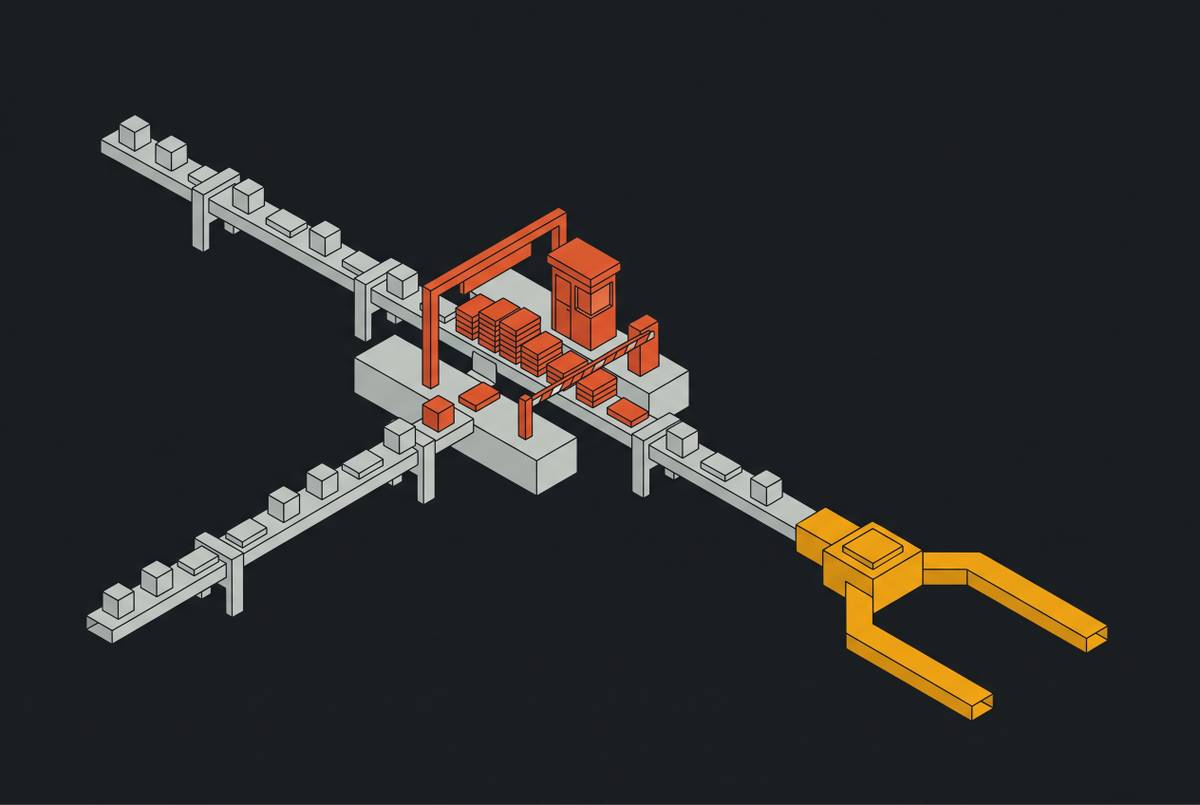
A governed data layer changes what consumers are allowed to depend on. Instead of requiring every consumer to query raw source data, it exposes pre-calculated, semantically modeled datasets. Humans and agents use those datasets safely and in the same way without touching production systems. The unit of analytics becomes a defined dataset rather than an improvised query against a source. That structurally changes how data is consumed.
This distinction also sets a limit on the claim that governance escapes connector rot. Any source handoff that remains still carries its API, schema, and authentication dependencies. A governed layer removes the requirement for every consumer to work directly against those external contracts and provides a common place for meaning and access rules. Where the data already lives in the chosen analytical home, the architecture can also avoid introducing a separate extraction dependency.
Pre-modeling data into governed datasets makes them queryable through a lightweight engine, giving agents fast, accurate, cheap-to-query context. Keeping agents away from production databases provides defense in depth at the architectural level. Access control enforced by the database protects data where it lives, even when third-party tooling uses it. Postgres Row Level Security is one way to enforce that control. For agent workflows, those rules belong in the database rather than solely in application-layer filters that agents can bypass or forget.
Shared definitions are just as important as shared access controls. Revenue, CAC, LTV, and churn each need one formula used everywhere, rather than a different interpretation for each dashboard or agent. A governed layer enforces that principle by construction. MCP can provide a standard path for agent access, but the datasets and their database-enforced rules must provide the meaning and boundaries. Without that foundation, self-service analytics distributes ambiguity instead of removing the bottleneck, and agents distribute the same ambiguity at scale.
Why Postgres is already the right home for that governed layer, for teams that run on it
For teams already running on Postgres and Supabase, this governed layer does not require a separate warehouse or a new infrastructure decision. Postgres is already the analytical home from which to extend those capabilities. The Stack Overflow 2025 Developer Survey named this database the most used and most admired database for the second year running. That adoption supports a practical advantage in existing skills, tooling, and operational familiarity. Teams already using Postgres can begin governing analytics where their data lives.
Supabase shipped physical read replicas in 2023–2024, background Edge Functions in 2024, and MCP server integration for AI agents in 2025. These capabilities help a Postgres-backed project get closer to serving humans and agents from the same data home without a separate extraction layer. They also make the distinction between database access and correct database use important. The MCP server gives agents the ability to work with a database. It does not, by itself, teach them how to do that safely and well.
Supabase's Agent Skills for Postgres Best Practices addresses that second requirement with 30 rules across 8 categories. Supabase based those rules on mistakes that kept coming up in hundreds of thousands of projects, as found by its support team, database advisors, and documentation. Those mistakes include missing indexes on foreign keys, queries that accidentally bypass RLS, migrations that lock production tables, connection pool exhaustion, and full table scans hidden behind ORMs. These concerns require attention to database operations.
The leaner direction for the 2026 stack is fewer, better-integrated tools. For teams already on Postgres, a governed analytics layer follows that direction by avoiding an added ingestion layer, a separate warehouse, and their connector surface. Its purpose is to make defined datasets available while protecting the production database from direct queries. The escape from connector rot is therefore not a better connector or a bigger vendor. It is an architecture that removes unnecessary movement before use, enforces one definition of each metric, and gives consumers governed data.