Immutable Dataset Snapshots as Agent Memory Boundaries
Immutable snapshots lock agents to a single ground truth so they stop drifting into outdated facts.
An agent that tells a finance team their conversion rate is some precise value when the business redefined "conversion" the week before is reasoning correctly over a fact that stopped being true, because nothing in its architecture flagged the change. Production agents drift from ground truth because their memory has no fixed point to check itself against, not because they retrieve badly. The fix is an immutable dataset snapshot, and what follows is an account of why that fix works and what it requires to actually hold.
Why production agents drift from truth
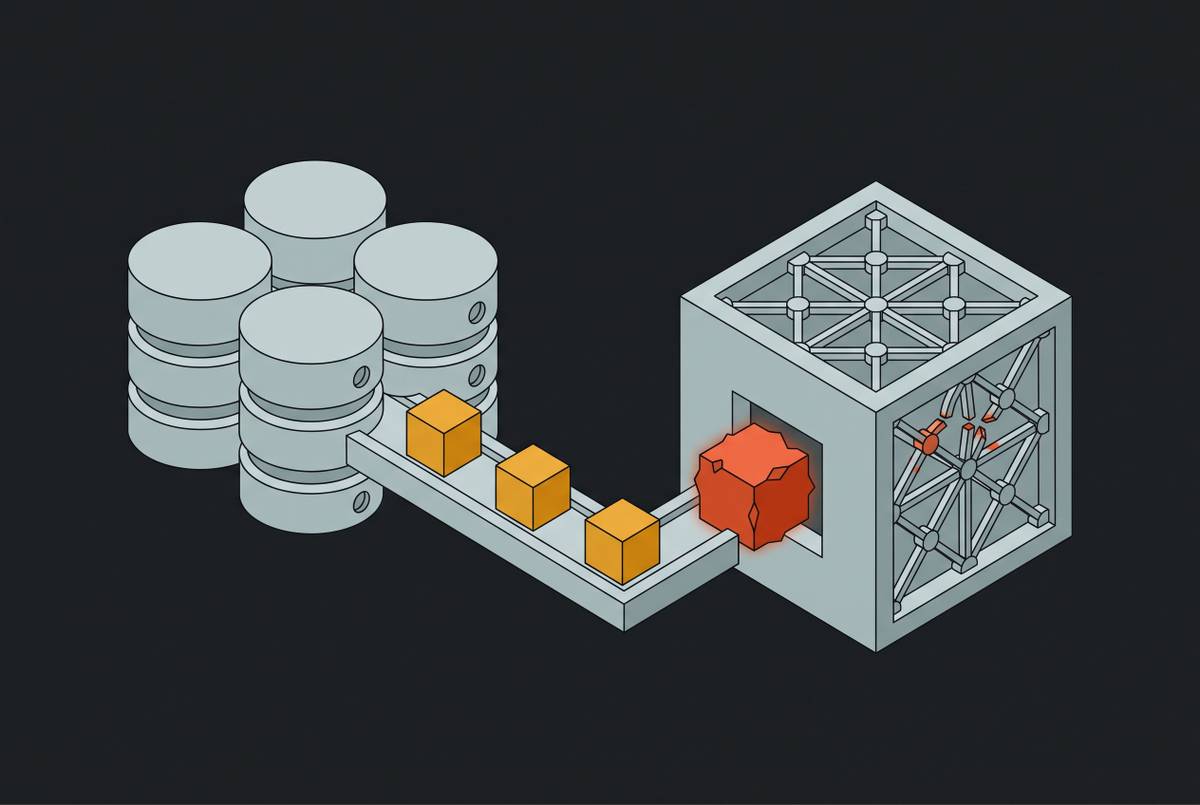
Production LLM agents hold no memory between API calls. Every session's working memory has to be built from scratch out of external stores, pulled in at runtime. That construction step is where state drift enters the system. Research out of the University of Illinois Urbana-Champaign, built around a benchmark called StateMemBench, draws a sharp line between recall failure and state-tracking failure: an agent can retrieve a fact correctly, word for word, and still act on a version of it that the world has already moved past. Retrieval answers "can the agent find this." Currency answers a different question entirely, "is this still true," and a memory system can pass the first test while failing the second one completely.
A fact revised in session three can be retrieved with full fidelity in session seven, but if nothing marks the revision as a revision, the agent treats it as though the update never happened. Every tool call built on that premise inherits the error. What's missing in each of these cases is the same thing: a reference point the agent can check its current state against, one that is itself incapable of drifting.
What "immutable" means for agent memory
Teams building agent memory often treat "stored externally" and "immutable" as the same property, but they are not. External storage just means the data lives outside the model's context window, in a database, a vector store, a file. Immutability is a distinct guarantee: a snapshot that cannot be modified after it commits, with its identity tied to its content so that any tampering produces a detectably different fingerprint.
The framework introduced by MemTX makes the underlying discipline explicit by borrowing it directly from database systems: a write is not a commit. MemTX applies the same discipline to agent belief state. A content-addressed snapshot carries this guarantee operationally: its identifier is a hash of its own contents, so an agent holding a reference to that snapshot is holding a verifiable pointer to one specific, unchangeable world-state, not a loose description of where data used to live. A read replica doesn't offer this. MemTX catalogues six failure families that emerge once this distinction gets lost: tool-result pollution, stale late writes, dirty reads of tentative state, semantic conflict, permission laundering, and cascading-rollback failures. Each one traces back to the same root cause, an agent treating a mutable write as though it were a committed, trustworthy fact.
Compaction drift: how summarization becomes a silent source of false ground truth
Long-running agents cannot keep full conversation histories inside a finite context window, so they compress what has happened into summaries. That compression is lossy by necessity, and the summary that results is an artifact built from the original record, not a faithful copy of it. The agent's working picture of its own past becomes something constructed, and that construction can diverge from what actually happened without anyone, including the agent, noticing.
StateMemBench demonstrates that this problem survives even when retrieval works perfectly. The compressed representation an agent pulls back can be exactly correct as a string of text while being entirely wrong as a description of current state, and the agent has no internal mechanism to tell the two apart. The gain comes from treating revision history as its own category of memory object, distinct from fact history, so that when a fact changes, the change itself gets recorded rather than just the new value overwriting the old one in a summary.
Without something immutable to check against, a summarized memory has no way to prove itself. There's no checksum available to confirm that a compressed belief still matches any state that was ever actually committed. Long context windows aren't going away and compression will remain necessary. Validating summaries periodically against an immutable record gives working memory a fixed boundary it can be audited and corrected against. In analytics agents specifically, compaction drift occurs when a metric definition is compressed into informal shorthand that quietly diverges from the canonical definition sitting in the governed dataset the agent is supposed to be reasoning from.
Live data access and internal consistency across a single reasoning session
Even a perfectly maintained memory layer fails if the data underneath it keeps moving while the agent is reasoning. When an agent queries a live production database across a multi-step task, the rows behind the first tool call and the rows behind the third tool call may not be the same rows, because other processes are writing to those same tables in between. Each individual query can return a result that is correct at the exact moment it runs, and the overall chain of reasoning built from those queries can still be internally inconsistent, built from pieces of data that never coexisted as a single true picture of the world.
Human analysts have had this problem solved for them for decades by read-committed transaction isolation, which hands a query a snapshot of the data as it existed when the transaction began. An agent operating without an equivalent guarantee is reasoning over a target that keeps moving under it mid-task. MemTX names the sharpest version of the consequence: an unvalidated belief, or one that has already been invalidated by a subsequent write, reaching an irreversible tool call turns a recoverable data error into an action that cannot be undone, a refund that goes out, an email that gets sent, a record that gets deleted. The governance layer makes this worse in practice. Most organizations deploying agents today have not defined access controls specific to what those agents are allowed to touch, and the most frequently reported production failure is over-privileged access, agents holding credentials to systems well beyond what their actual task requires. Routing analytical queries to a live production database stacks two separate failures on top of each other: a consistency failure, because the data shifts between calls, and a privilege failure, because the agent can see, and sometimes affect, tables that have nothing to do with its job. The architectural implication is direct. Live production data is the wrong query target for an agent, and something else has to serve that role instead.
What an immutable dataset snapshot provides
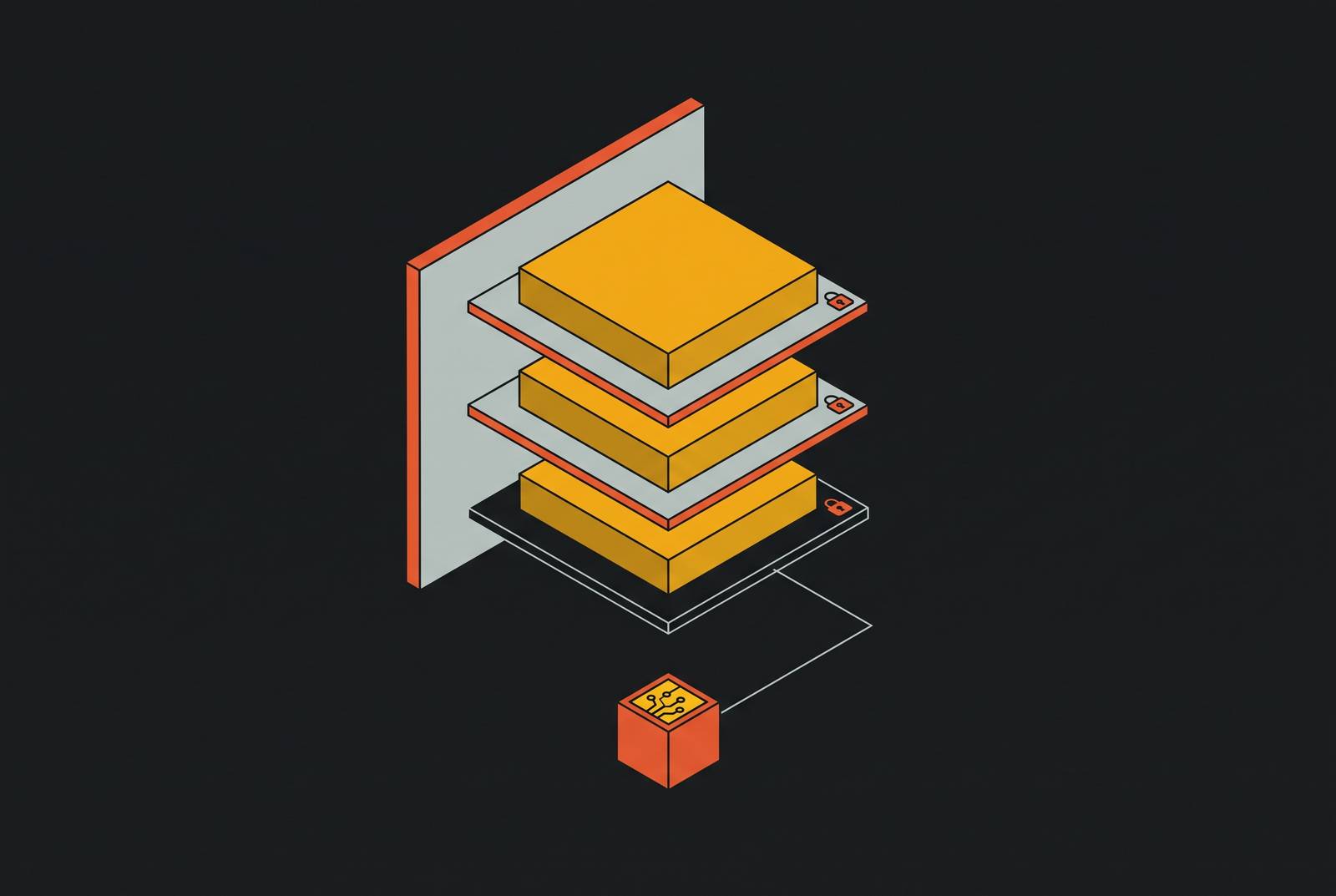
An immutable dataset snapshot freezes the data plane at a single point in time, giving an agent's entire session one coherent world-state to reason over from first query to last.
The snapshot delivers three distinct guarantees simultaneously, and no other tier in the memory stack offers all three at once. Consistency comes first: every query inside a given session draws from the same frozen state, so the agent's reasoning holds together internally because of how the data is structured. Auditability follows from the content-addressed identity of the snapshot itself, since that identity means any future audit can reconstruct precisely what the agent had access to and when, not a transcript of what the agent claimed, but a verifiable record of what the underlying data actually said at that moment. Safety is the third: the agent never holds production database credentials at all, reading instead from a governed, pre-calculated dataset that its own actions cannot mutate even accidentally.
MemTX's action-safety gating principle sharpens why this matters for irreversible actions specifically. Irreversible tool calls should be gated on the maturity of the belief state driving them, and a snapshot-backed belief is the only kind whose maturity can actually be checked at the moment the gate matters. None of this replaces the broader four-tier memory architecture an agent relies on. The snapshot produces factual ground truth for data that has already been committed, functioning as the foundation underneath the structure. Pre-calculated, governed datasets sharpen the guarantee further still, because the agent is no longer reasoning over raw rows pulled from a table. It is reasoning over metrics that have already been semantically validated, definitions agreed on by the same humans who will eventually read whatever the agent produces.
The semantic layer as a prerequisite for a snapshot of governed data
A snapshot of uncertified tables freezes the wrong thing. The agent still reasons over raw data that may conflict with itself across different tables or teams, and freezing that conflict in place doesn't resolve it, just makes it consistent. A consistent wrong answer is still a wrong answer, delivered now with more confidence than it deserves.
Establishing a single source of truth for metric definitions cannot be treated as a goal to pursue after agents are already deployed. It has to exist before the first agent query ever runs. A semantic layer, versioned and governed business logic that names and defines each metric explicitly, is what turns a frozen snapshot into a memory boundary worth trusting. Without it, the snapshot is a photograph of a scene that was already in dispute before the shutter closed. The snapshot has to expose governed metric definitions as the thing an agent is allowed to call, with no arbitrary access to the tables sitting underneath them.
MCP's move to stateless protocol and explicit snapshot references
The Model Context Protocol specification revised on July 28, 2026 removed protocol-level session tracking. Where a server once maintained a session object that implicitly carried context like protocol version, client identity, and capabilities across a connection, that information now travels explicitly in a _meta field attached to each individual request.
For analytics agents, this has a concrete consequence: the reference to an approved snapshot, which dataset, which version, which point-in-time freeze, has to be stated explicitly on every request rather than inherited automatically from a session that was established once at connection time. Stateless does not mean context-free. Context continues to live in signed tokens, external stores, request metadata, durable logs, and query histories. But the mechanism that carries snapshot identity through a chain of requests now has to be built deliberately by whoever is building the system; the protocol no longer supplies it for free. An MCP server built to expose pre-calculated, versioned datasets resolves this cleanly. The snapshot reference lives in the identity of the tool's endpoint itself rather than in session state a client has to manage, which means the server enforces the dataset version being used, not the client.
Applying the pattern in practice for Supabase and Postgres teams without a dedicated data team
The practical path into this pattern follows a specific order. Row Level Security, enforced at the database layer rather than bolted onto the application layer, comes first. A read replica or a pg_duckdb-backed snapshot becomes the agent's query target after that, with the production OLTP database taken off the table entirely as something an agent is ever allowed to touch directly.
Supabase's announcement of Supabase Warehouse in March 2026, built on pg_duckdb, co-developed by Hydra and its co-founder Joe Sciarrino, matters directly here. Supabase's own supabase/agent-skills project, 30 rules spread across 8 categories for AI coding agents working against Postgres, models the separation of concerns this whole pattern depends on: an agent given MCP access plus these rules will warn before creating an index that locks a table, and will suggest Row Level Security policies before it ships code that would otherwise be insecure. The rules are the governed layer. MCP access is only the transport carrying requests to it.
Applied concretely, the pattern looks like this. Metrics get pre-calculated into governed Parquet datasets, queryable through DuckDB, so agents query the snapshot and never touch the live Postgres tables directly. Those snapshots get exposed through a single MCP server that carries the dataset version as part of the tool's endpoint identity, satisfying the stateless-MCP requirement without forcing every client to carry that overhead itself. Audit trails fall out of this automatically: because the snapshot is content-addressed and the MCP server logs every tool call it serves, any answer an agent produces can be traced back to the exact dataset version that generated it.
Managing the tension between snapshot staleness and live-data responsiveness
The strongest argument against this entire model is also the most honest one: a snapshot reintroduces a form of latency that looks, at first glance, like the very centralization that data teams spent the last decade trying to escape. A snapshot is, by definition, a record of the past. An agent reasoning entirely from yesterday's frozen metrics cannot answer a question about what is happening in the business right now, and pretending otherwise would just reintroduce the exact failure mode this piece has been arguing against, an agent speaking with confidence about a state of the world that no longer holds.
Managing that trade-off deliberately means accepting it rather than engineering around it with shortcuts that quietly reopen the consistency and privilege failures already described. The discipline that holds the whole architecture together is refusing to let urgency become an excuse to route an agent back to live production tables. Staleness, bounded and disclosed, is a known and manageable cost. An agent quietly reasoning over a moving target, with no way to tell the difference, is not.